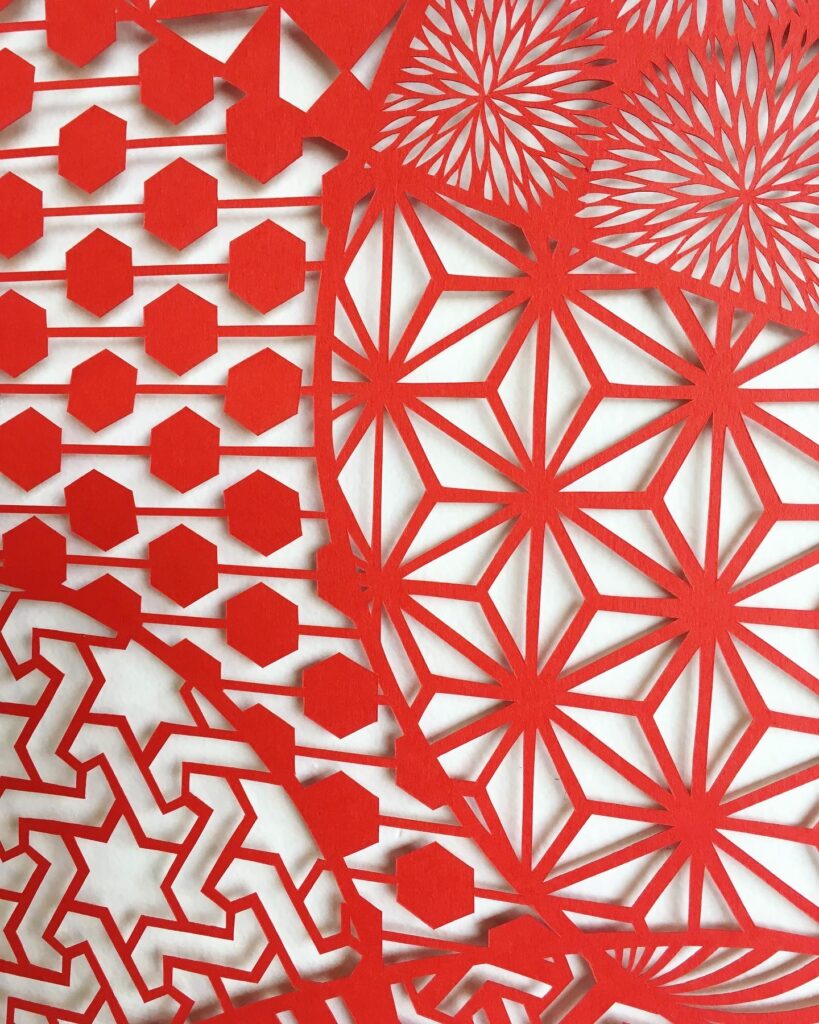
Pattern Mixing in a Medium Size

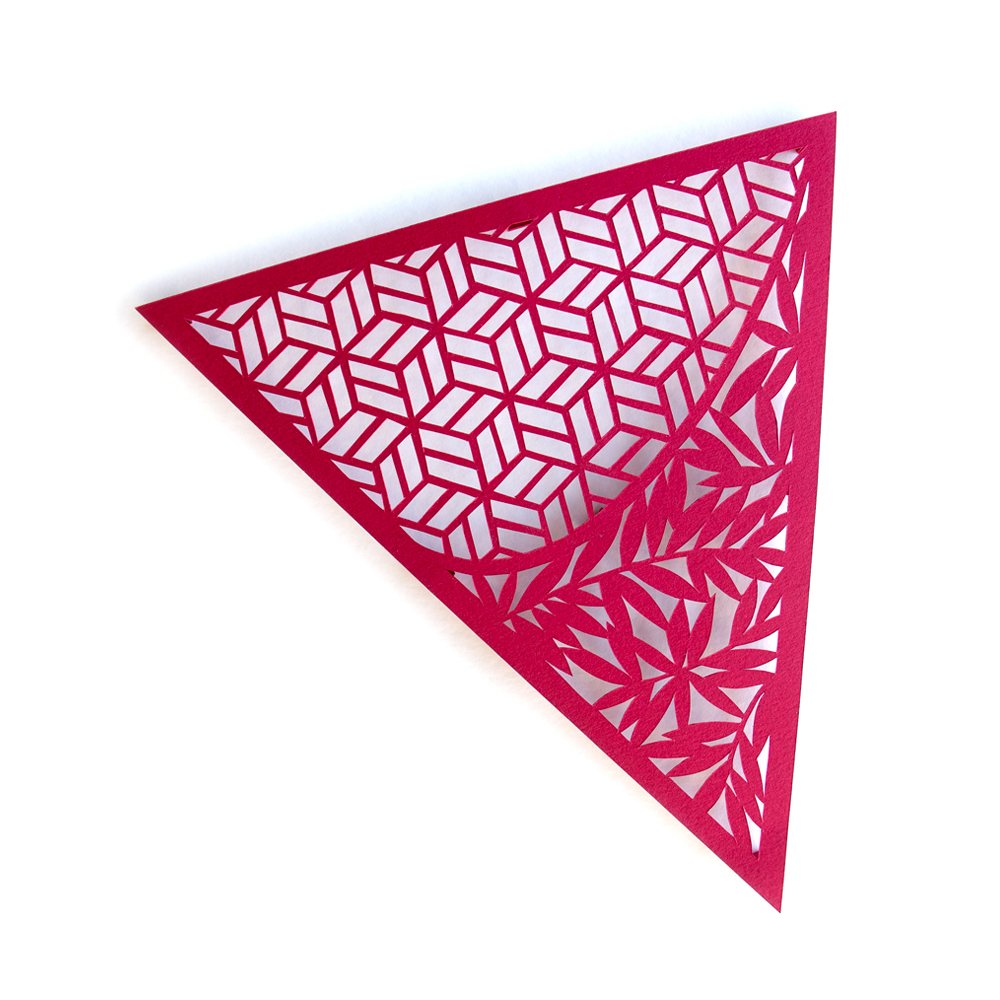
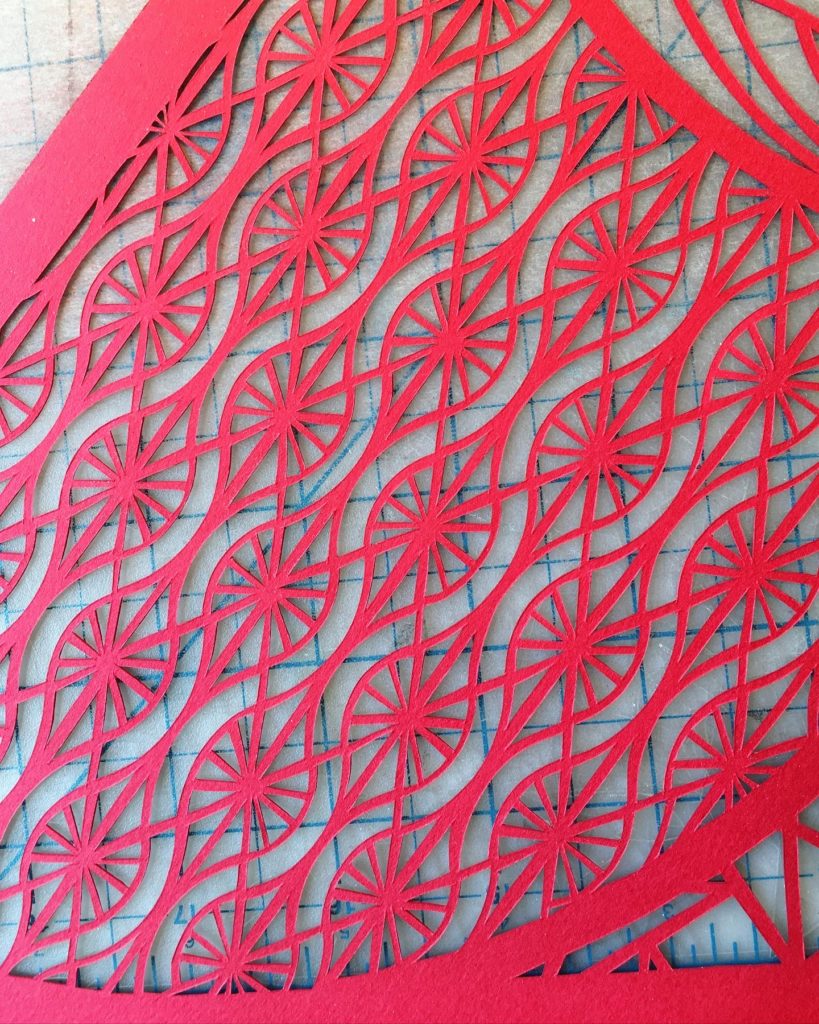
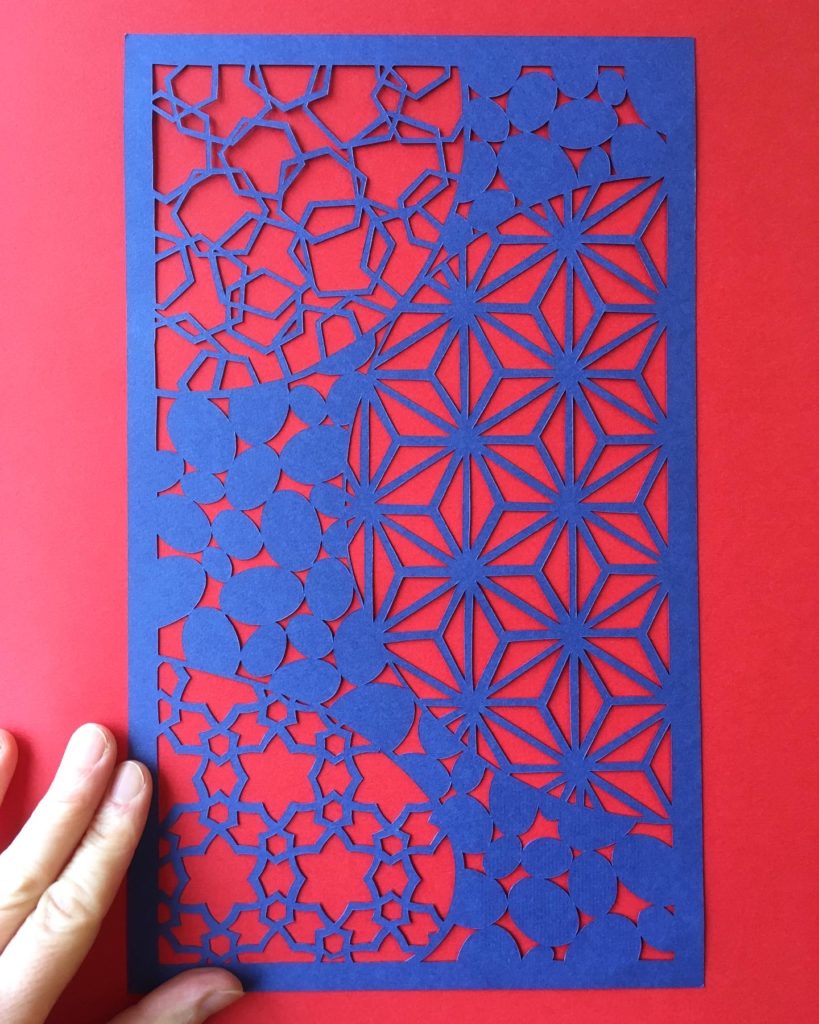
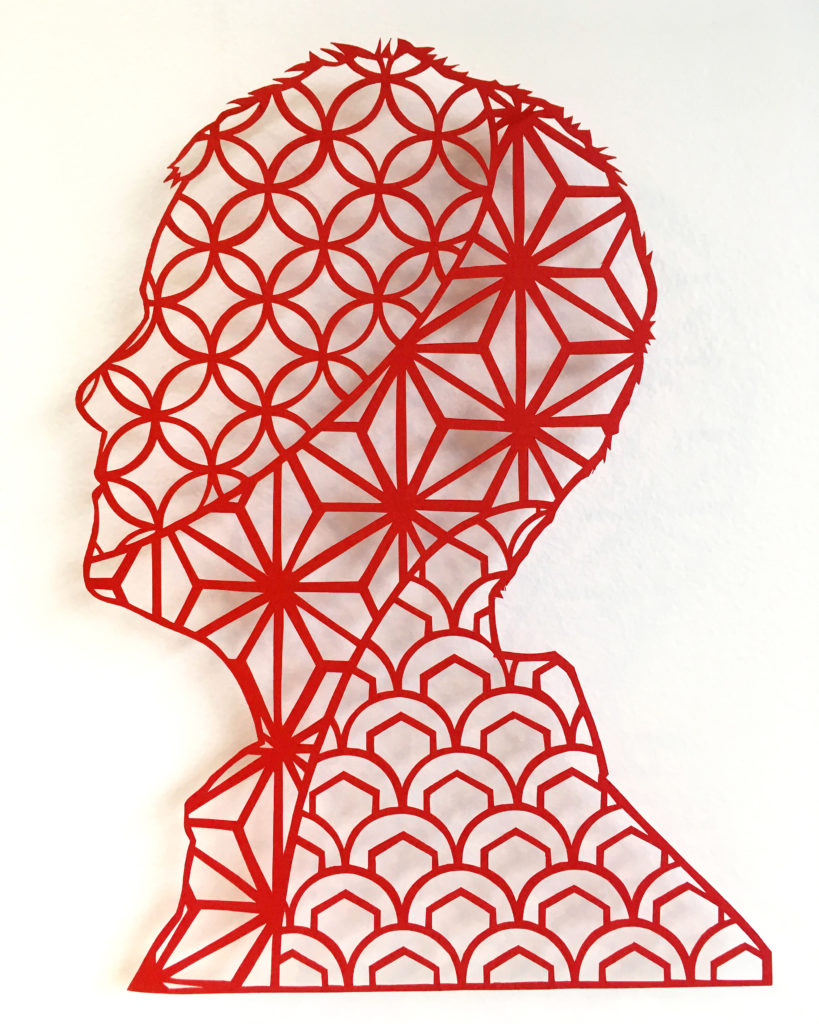
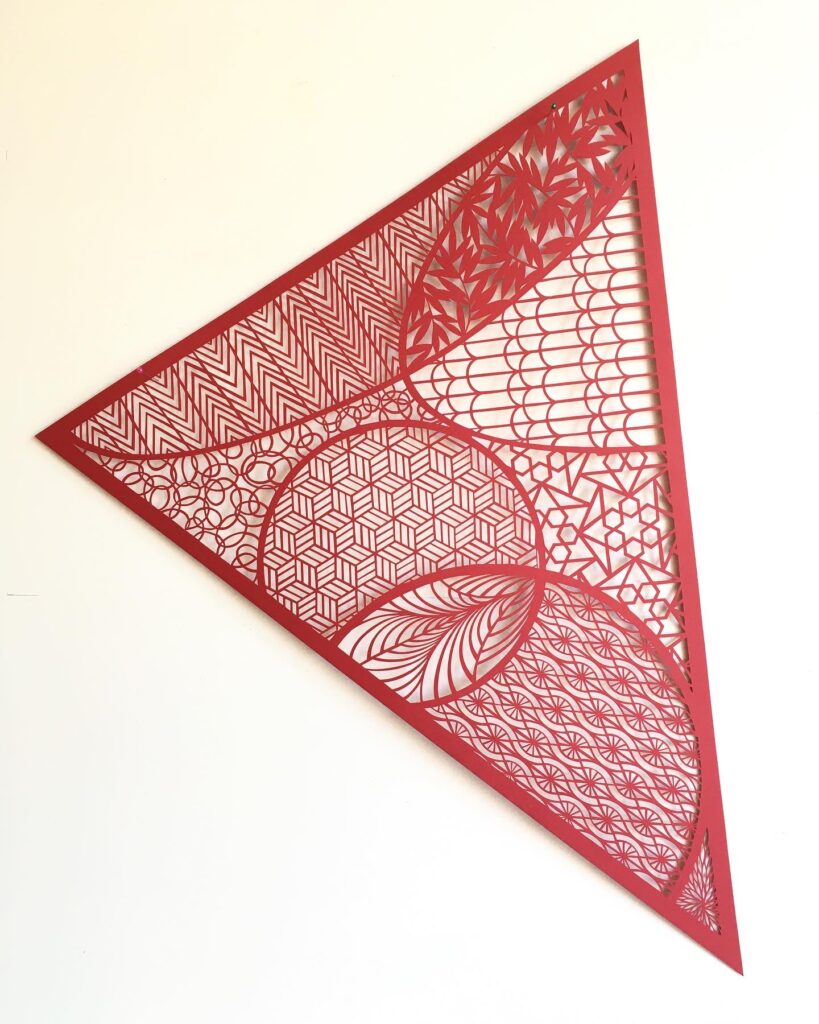
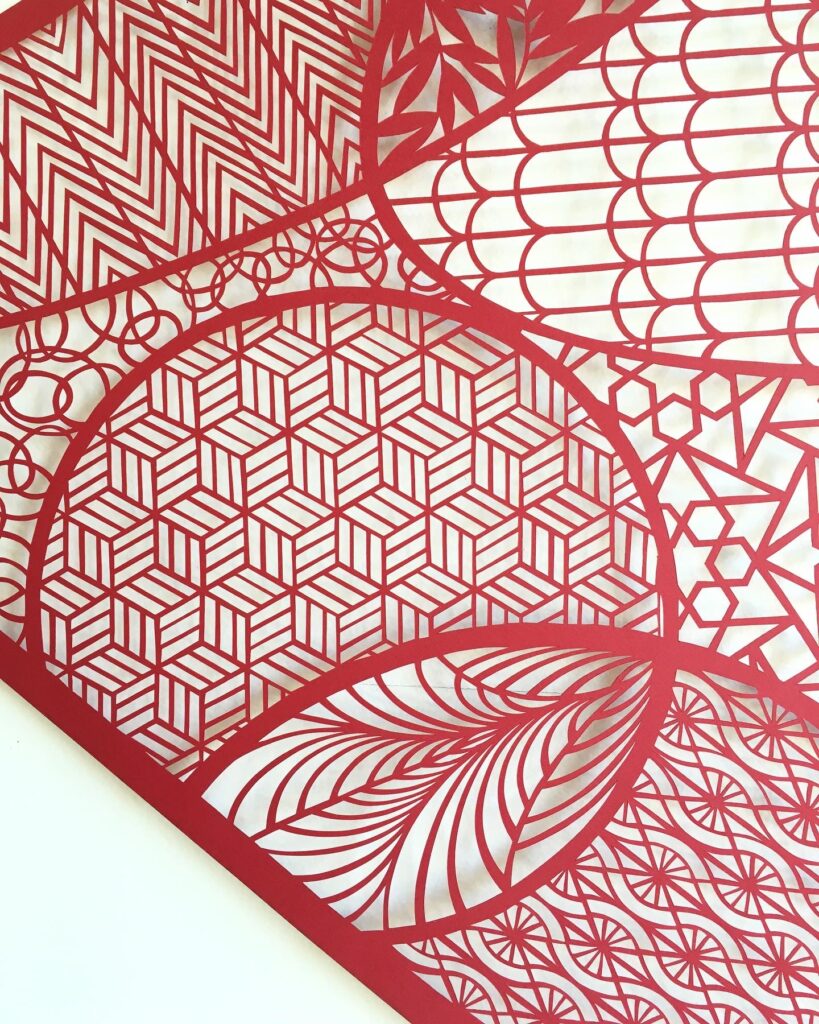
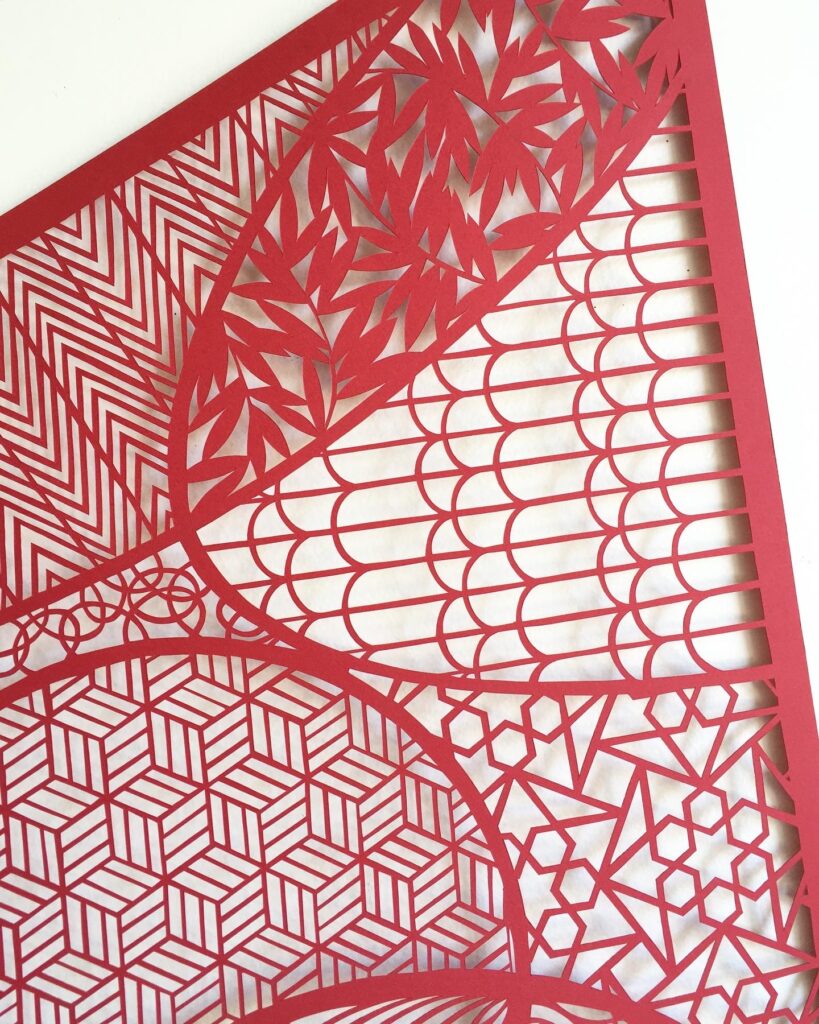
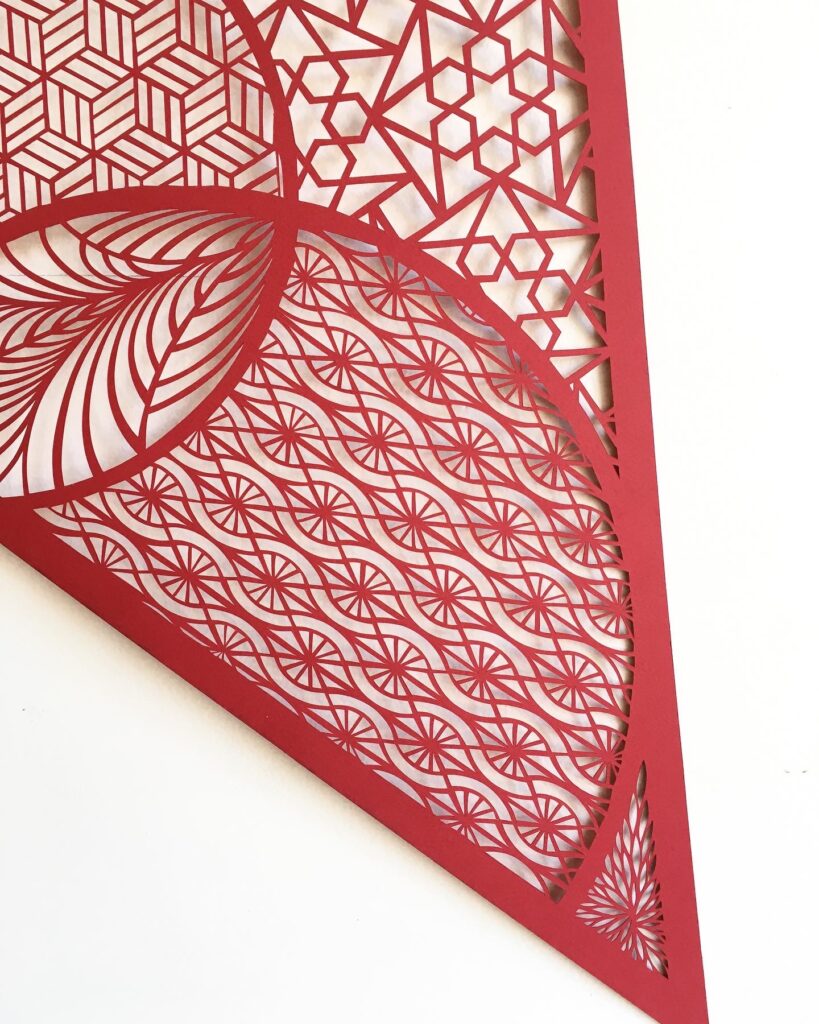
This red triangle is yet another scaled down pattern mixing composition I created for The Art Shop pop-up last November. The curator really liked this large piece but it didn’t fit the price point she was looking for. (I’m also holding onto it for another upcoming show).

The original triangle was composed of nine sections with unique patterns and this medium version has six sections. I think I used completely different patterns in each one because it’s one of the most enjoyable challenges when creating each piece – exploring new designs.


The finished version is framed as a 16 inch by 20 inch piece, and is available for purchase in my online shop.
Working Small in Pattern Mixing

I have so much work I haven’t yet shared on my blog, so I thought it was time to catch up a bit. I made A LOT of work last year, because what else was there to do but be heads down in the studio?! 

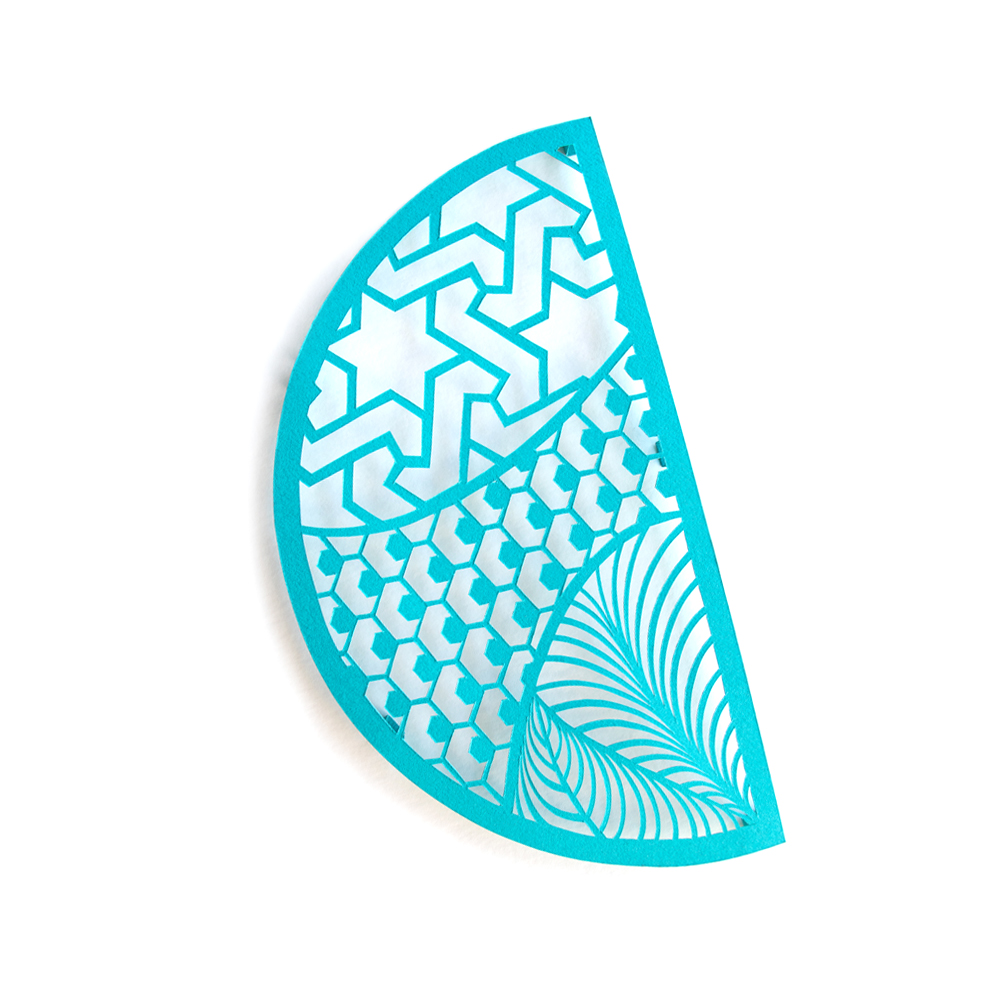
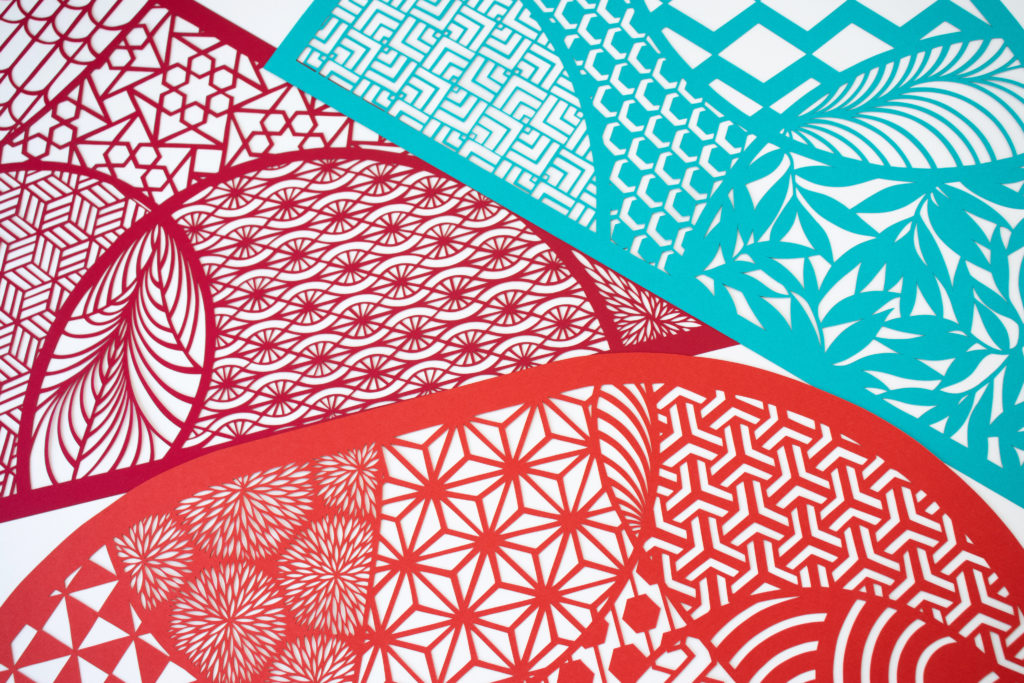
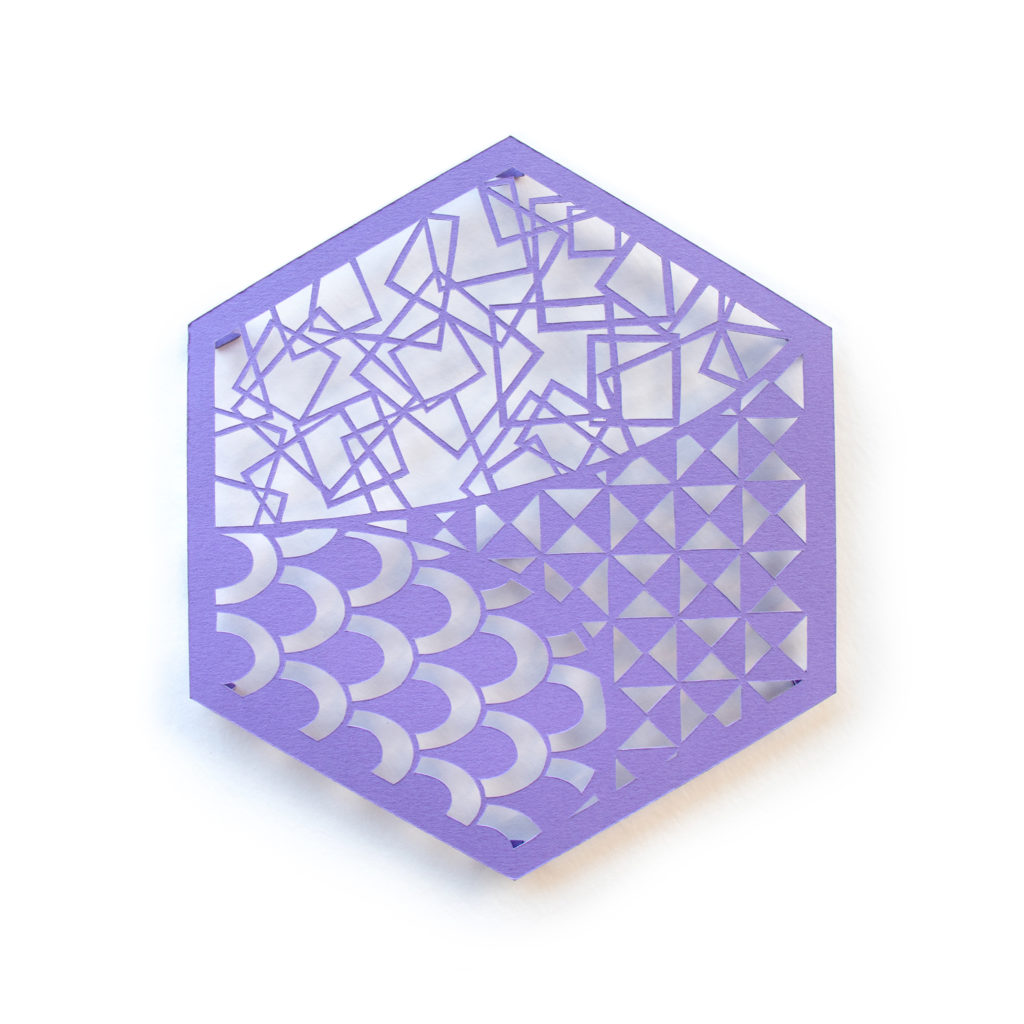
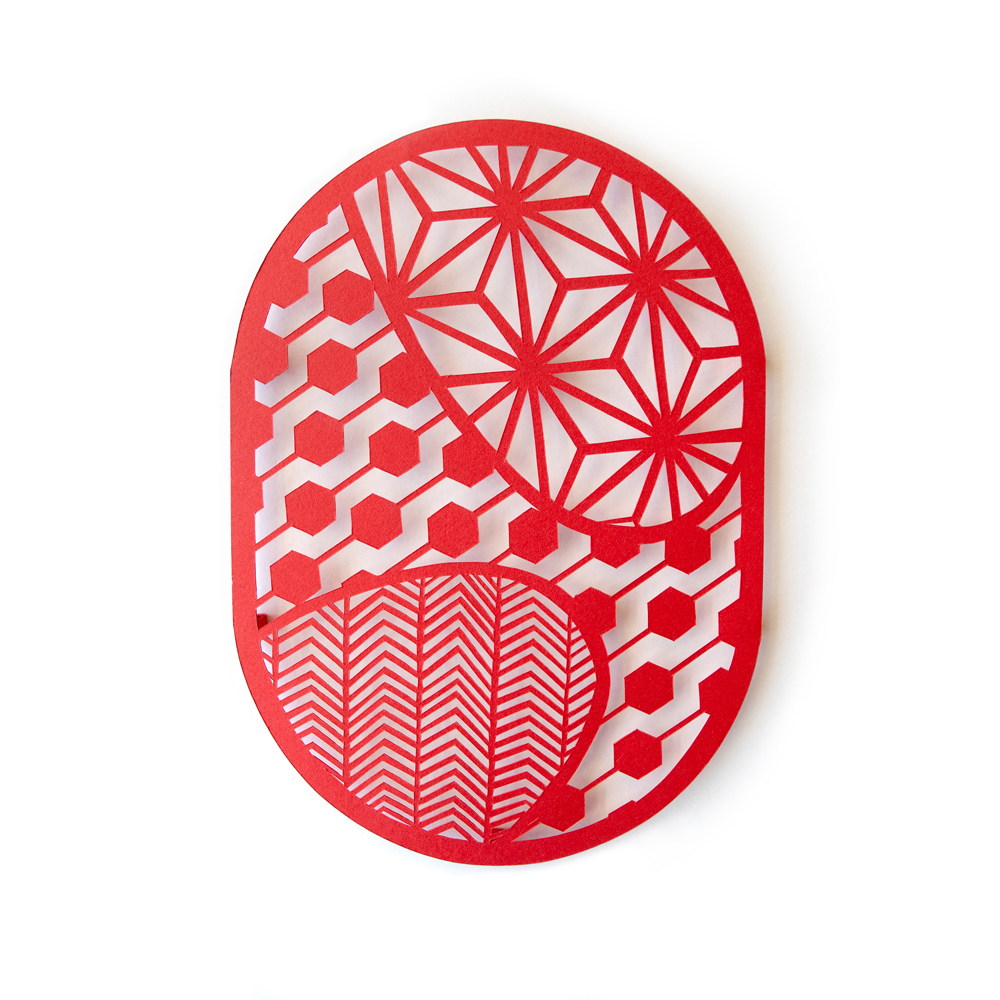
I needed to quickly produce a few small pieces for The Art Shop pop-up in the fall, and these three lovely pattern mixing pieces are some of what I made. I wasn’t sure pattern mixing would work well at a smaller scale, but it does. All of the pieces are small enough to fit into an 8 inch by 10 inch frame. All but one of them has sold.

My approach to making the work, other than scaling down the patterns, was to create less sections (usually there are seven to nine in a larger piece). I thought this might make them less dynamic but it works well at a smaller scale. 

I wanted to get away from making smaller work but then these went and sold well. I’m trying to decide whether or not to include them in ongoing available sizes.

The turquoise half-circle is still available in my online shop.
 

2020 Year End Review In Twelve Photos

I looked back at my year end review for 2019 as I began writing this post and it was interesting to reflect that I felt I started 2020 with a clearer idea of what I wanted to do. I think that actually carried through after an initial stumble through March to May, as we all struggled with the new normal.

It was a really good year creatively for me. I used a long unfinished installation (started in 2015!) as the project to get me back into the studio in May and working away again after feeling both stuck and blocked. It led me to a new body of work, and to creating some amazing pattern mixing pieces I love very much. I also finally (!) made myself a beautiful new portfolio website, which was YEARS overdue.


January


February


March


April

May


June


July

August

September

October

November

December

2020 was a year of pattern and colour in the studio.

Folded Paper Stars

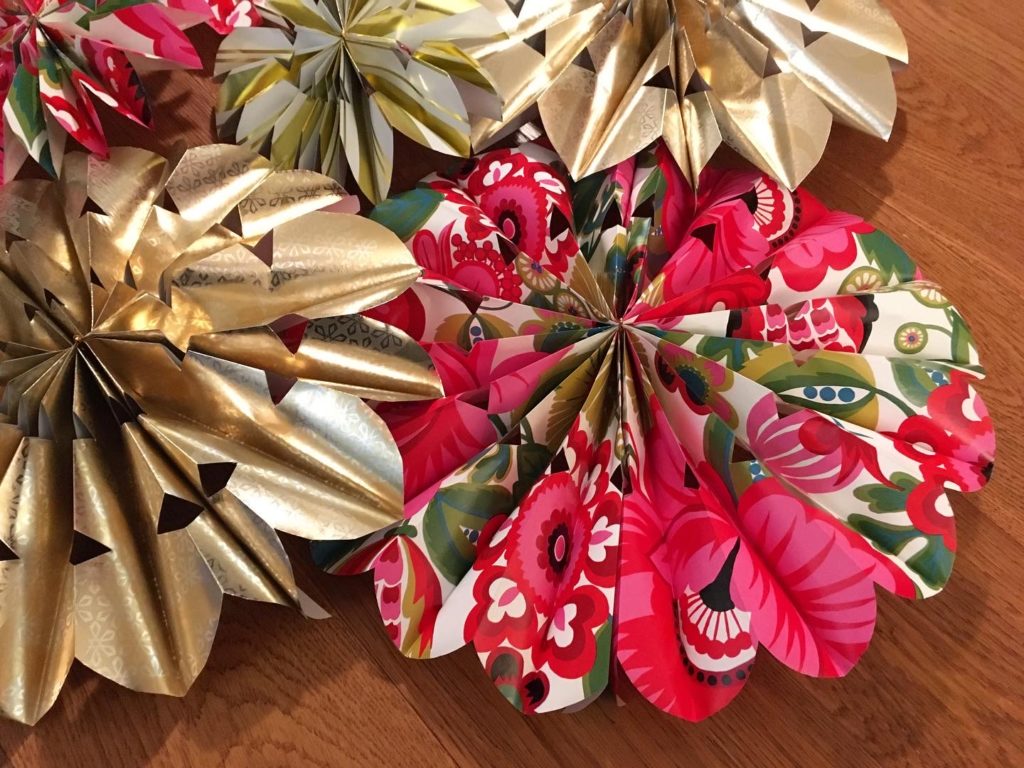
In an unexpected turn of events, I decided to make more Christmas crafts yesterday. Normally I steer clear of seasonal making but this year I have lots of spare time because of covid isolation, and I want our home to be more festive than usual. 

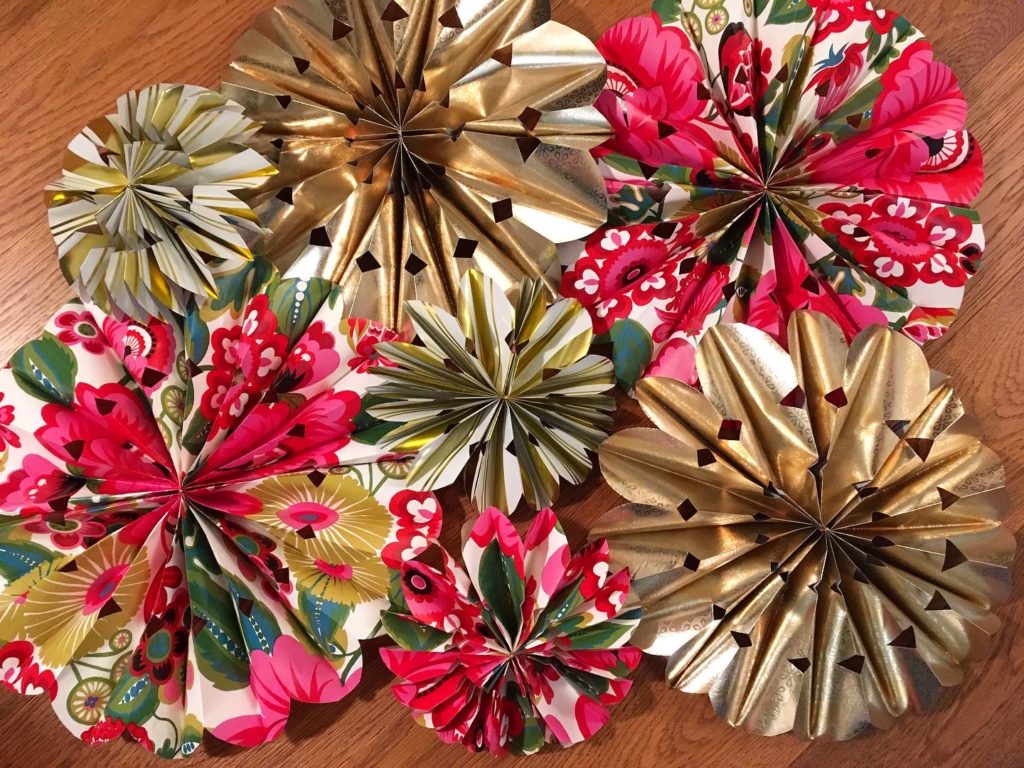
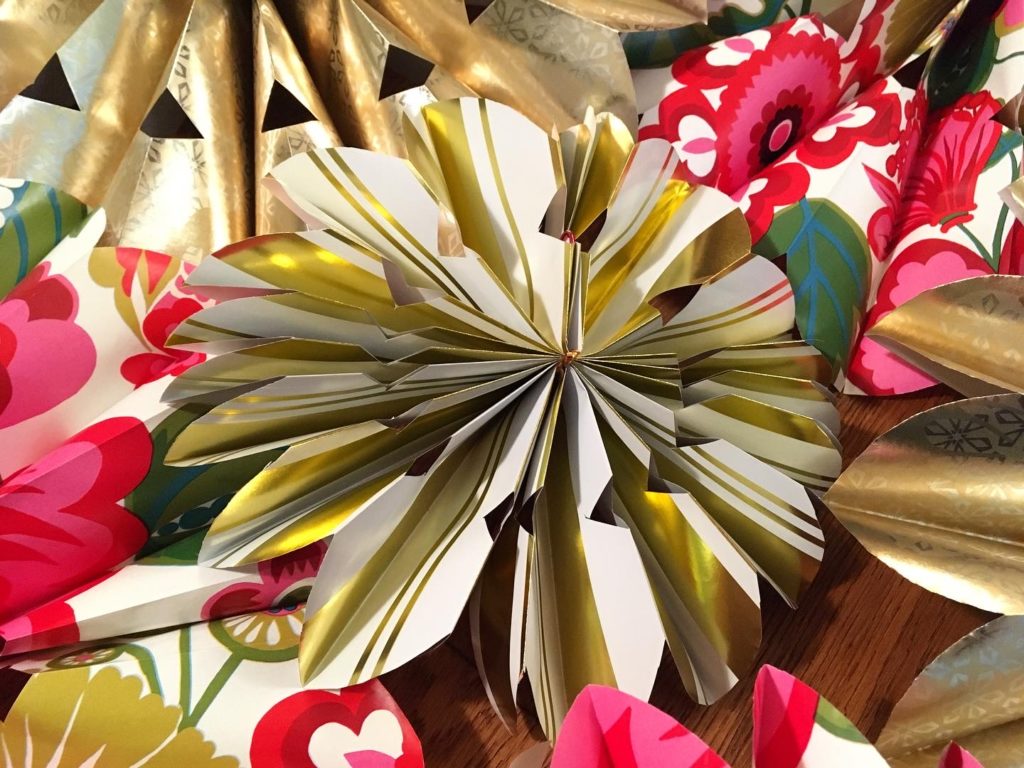
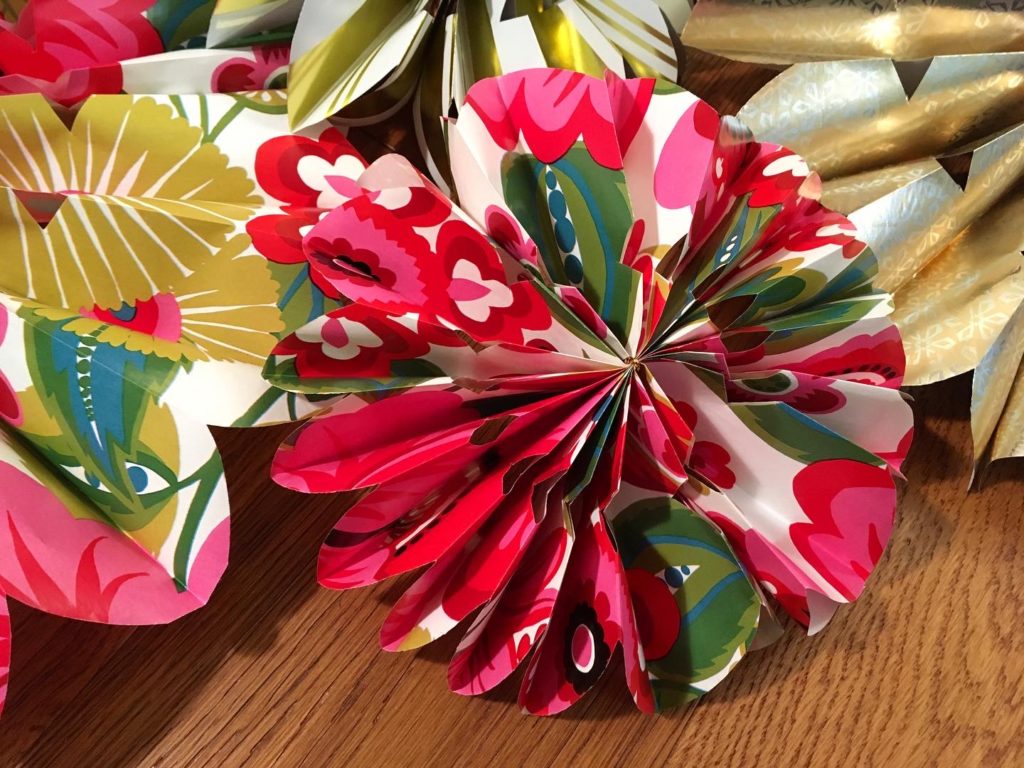
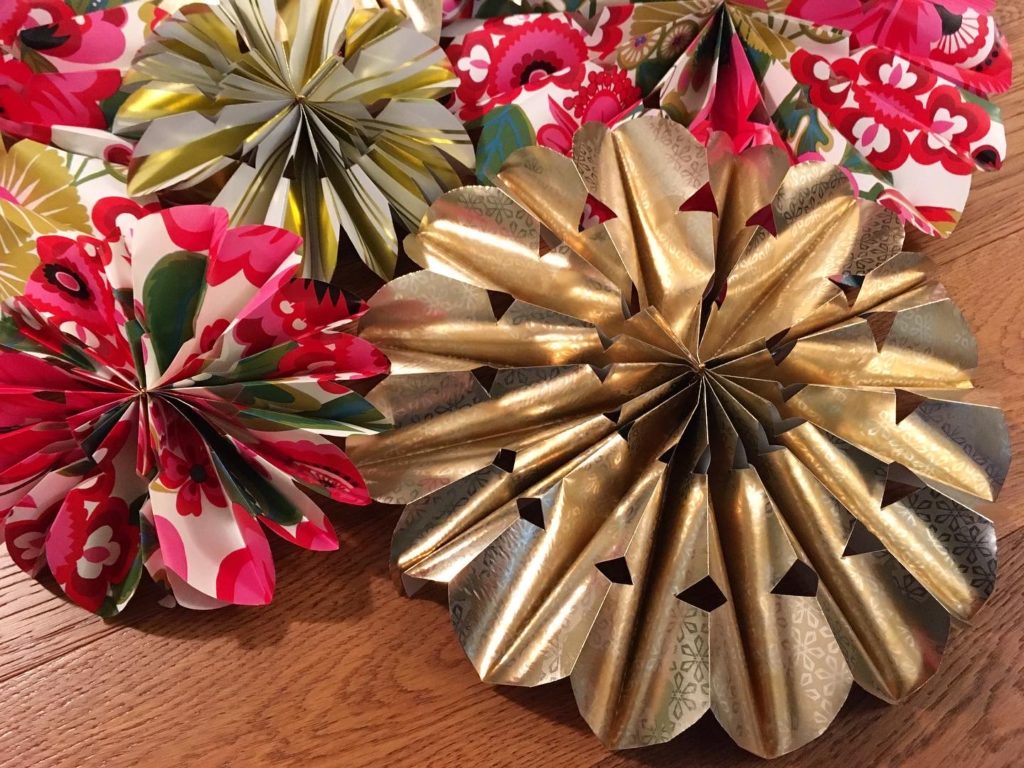
I came across a tutorial on IG for making these folded paper stars, and decided I had to make some myself. I see these everywhere as a decoration you can purchase, but they’re actually very simple to make. I used wrapping paper for mine, which is a tiny bit on the light side but it works.

I had a bit of paper on hand to use but decided to pick up a few rolls of wrapping paper at the local “stuff store” (one of those dollar stores that’s not a dollar store). I found the bright pink floral paper and a striped metallic that works well. 


I cut the paper into a few different sizes to make a mix of large and small paper stars. I really enjoyed making these, and kind of want to keep making more to give away to people.


If you’re interested in making these yourself, you can find the tutorial by Linda Lomelino over on her Instagram account .


A Christmas Wreath Made From Paper

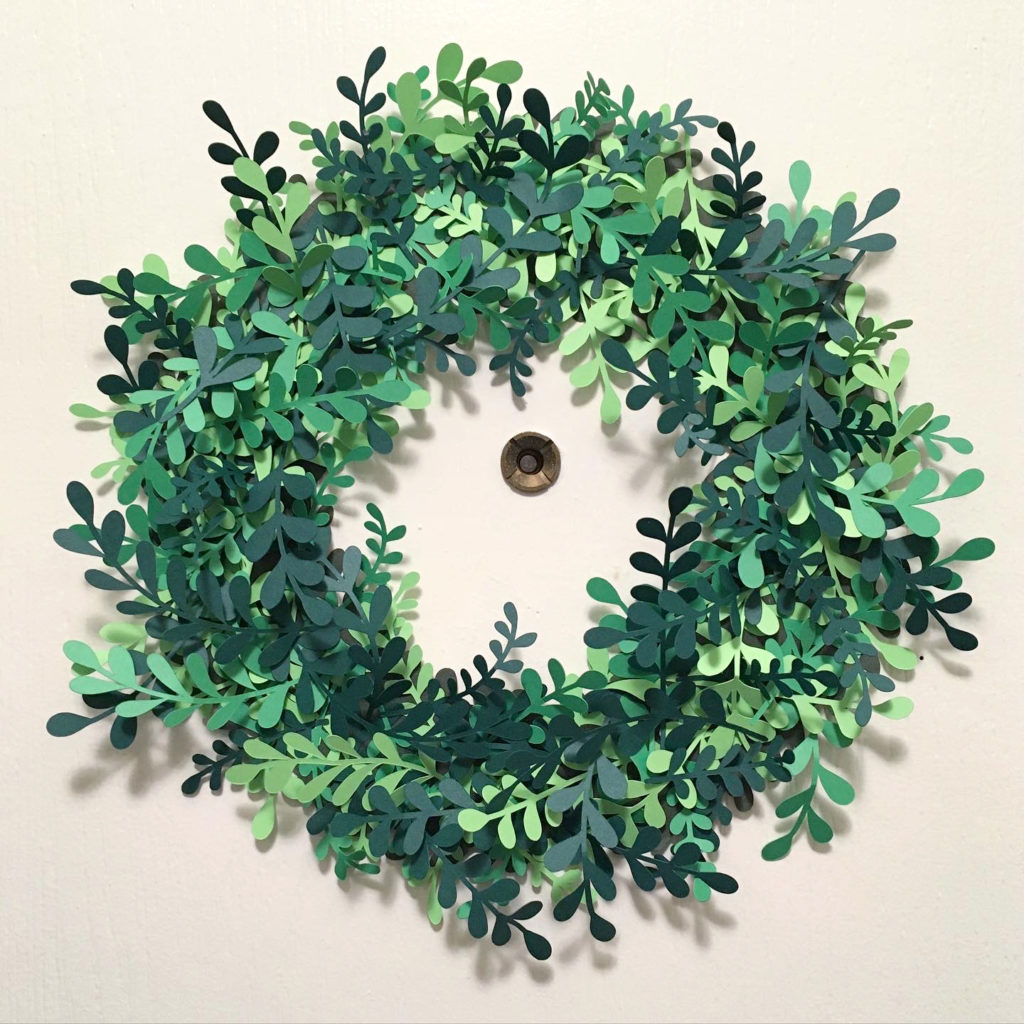
For this strange isolated Christmas season I decided to make new decorations for our home to ensure it feels cheery and cozy, and above all, Christmasy. We’re usually on Bowen Island staying with Boris’ family, so we don’t bother decorating at all (other than advent calendars). It’s been years since I last decorated for the season, so we don’t actually have anything Christmasy to put up. 

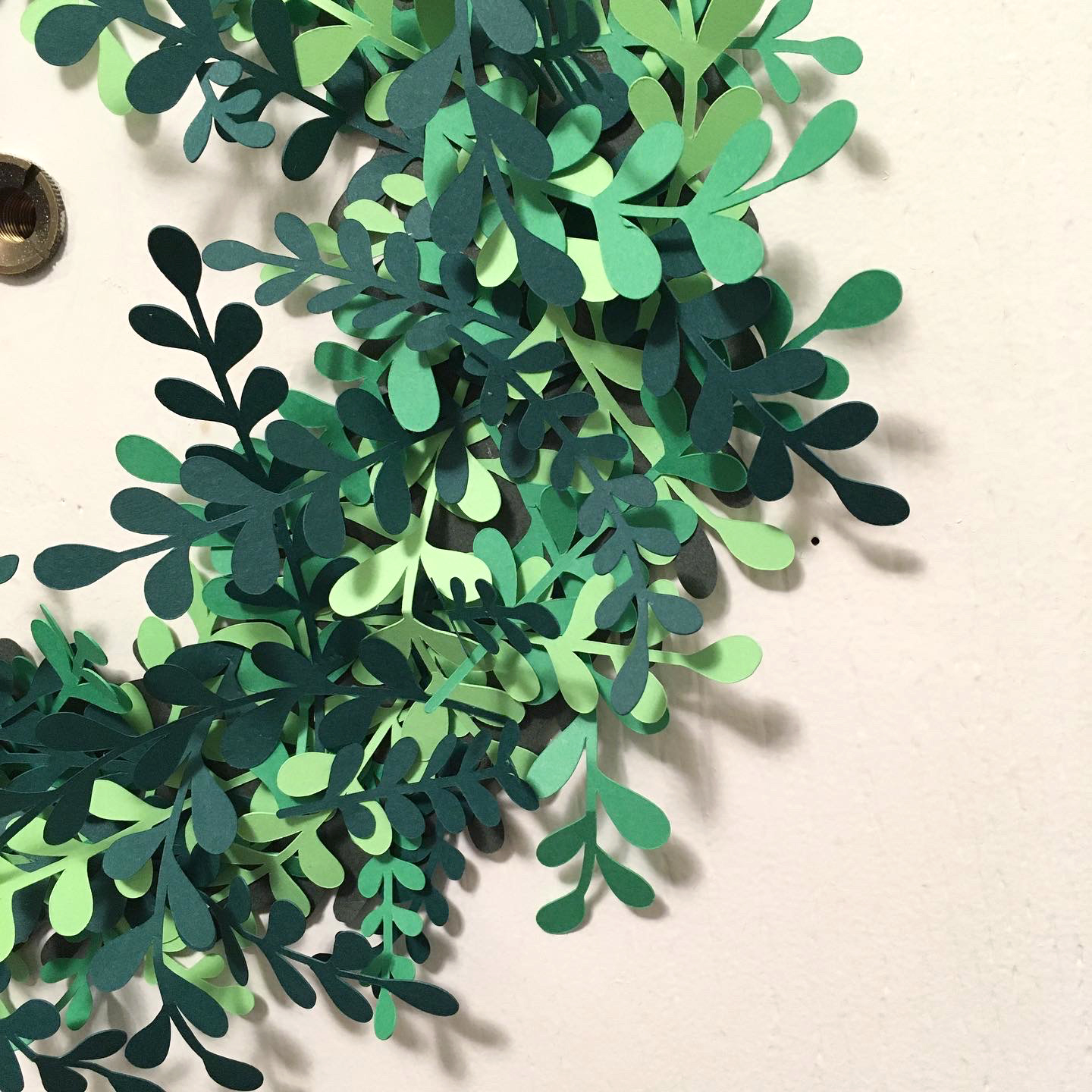
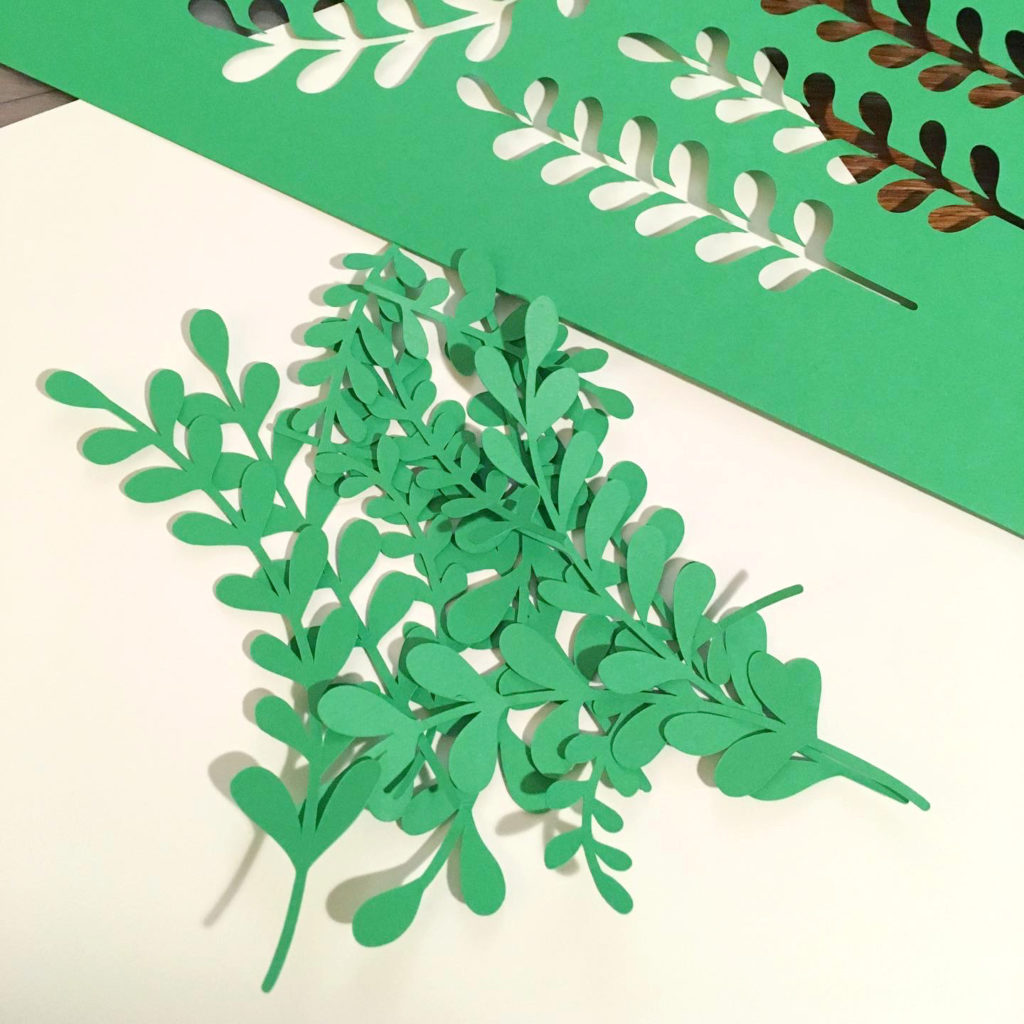
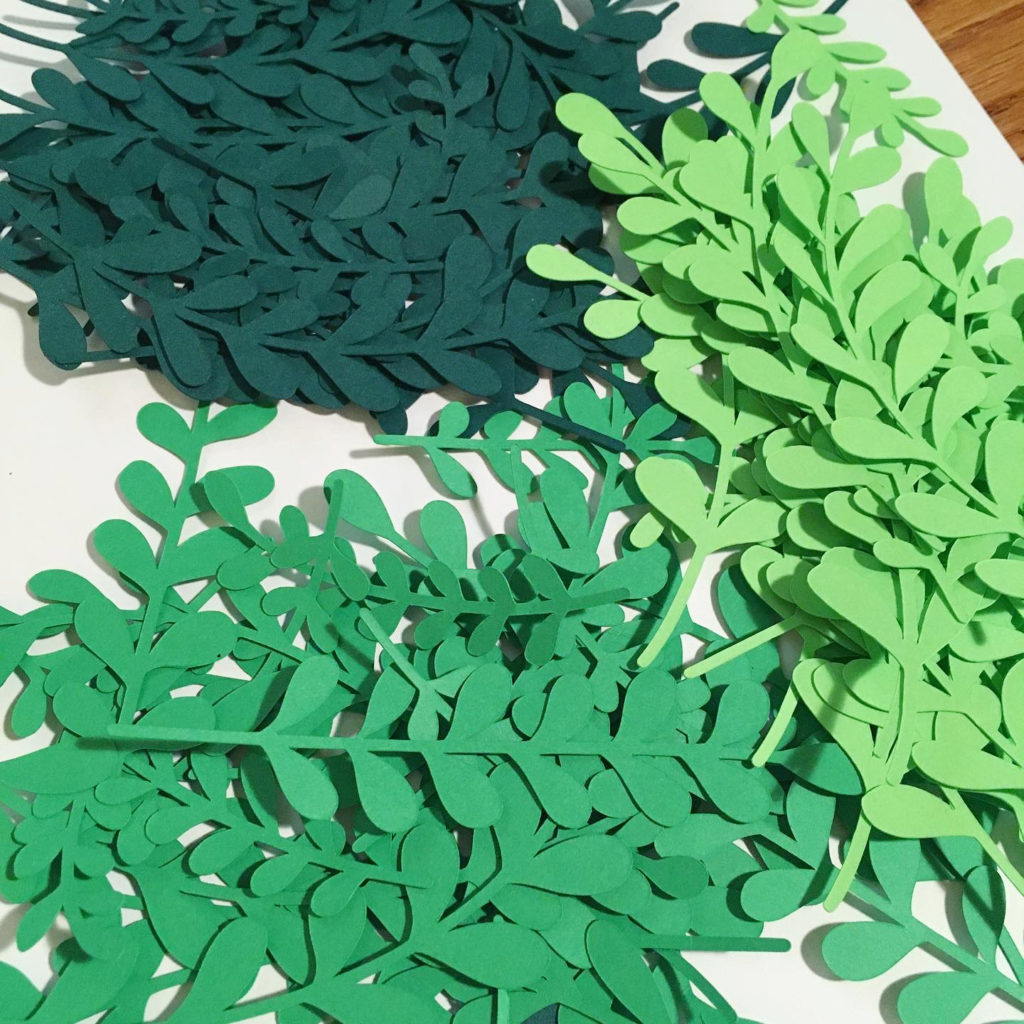
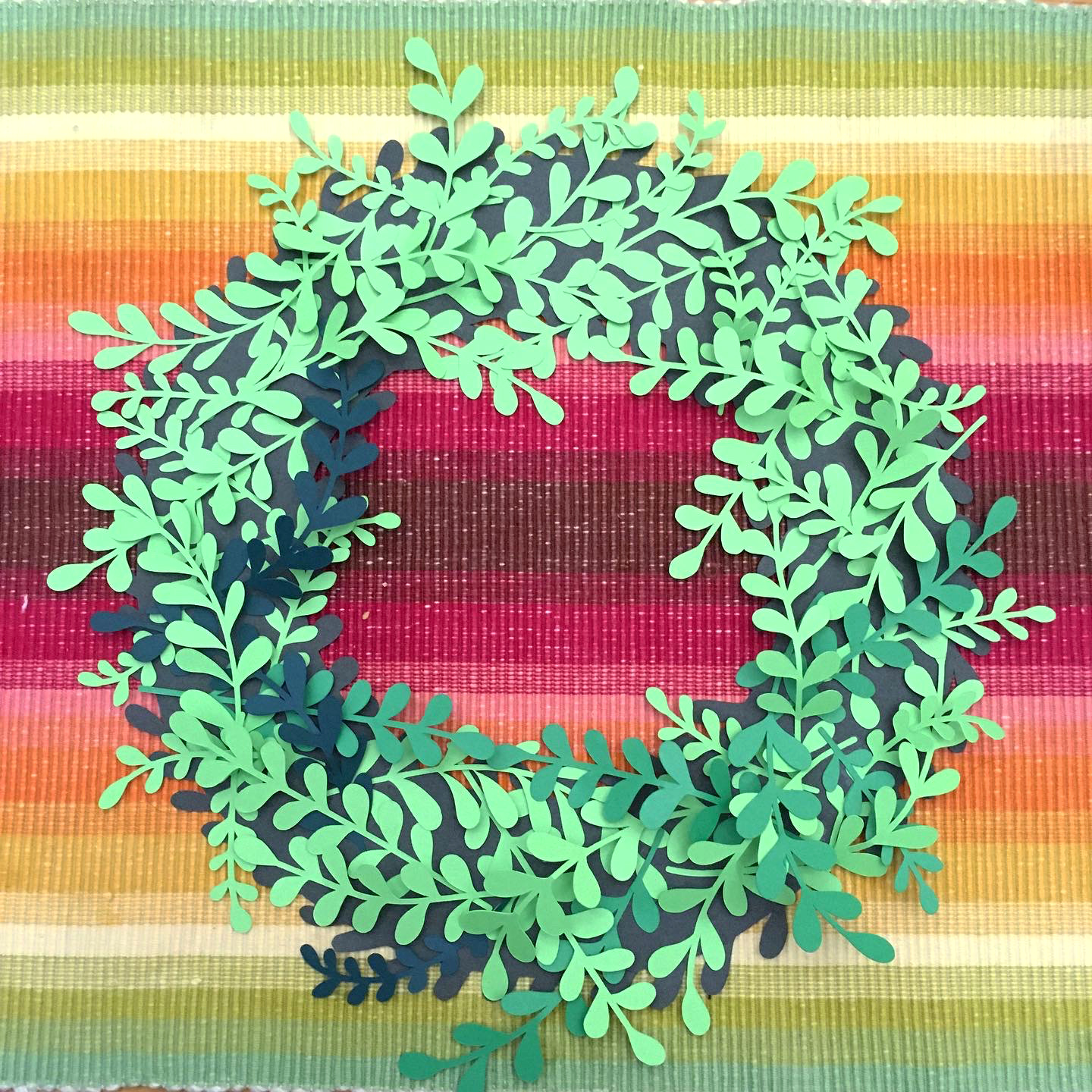
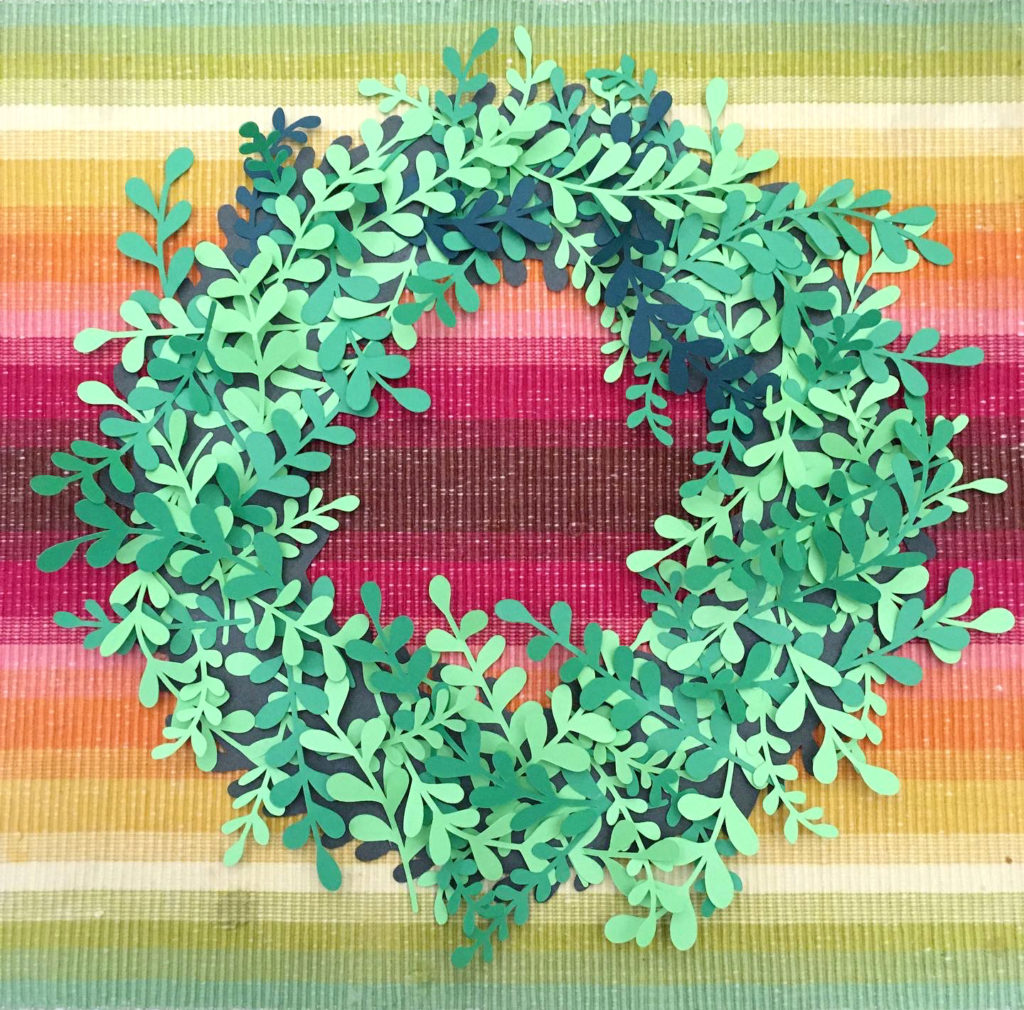
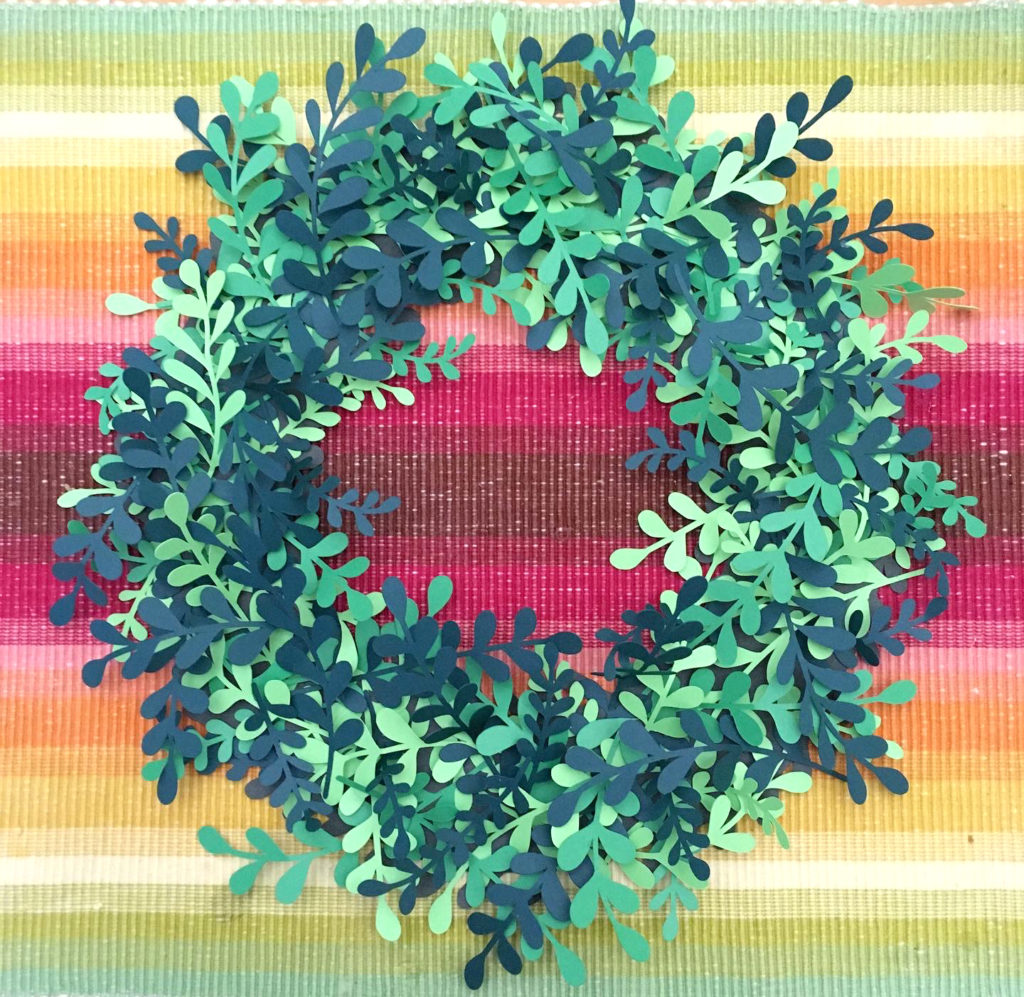
I decided to make a wreath from many many pieces of paper. Don’t worry, I did not hand cut these. I used my Silhouette Cameo digital cutter, which is something I don’t often do, but hand-cutting all of those branches was not an option. The boxwood wreath design file is by Amanda McGee Designs, and it required nine pieces of card stock to cut all of the elements. It was a good challenge to put it all together, and it looks beautiful. 


I took plenty of process photos along the way. Prepping the digital file and then the many pages of cutting took about three hours, and then assembling the layers and layers of branches took a few more hours. I made this over three consecutive evenings, not all in one sitting. The piece also comes with branches and berries but I decided to skip that part because it felt too fussy. It looks lush and wonderful as it is. (I was also tired of working on it)


Layer one with the lightest green


Layer two with the medium green


Layer three with the darkest green, and done!


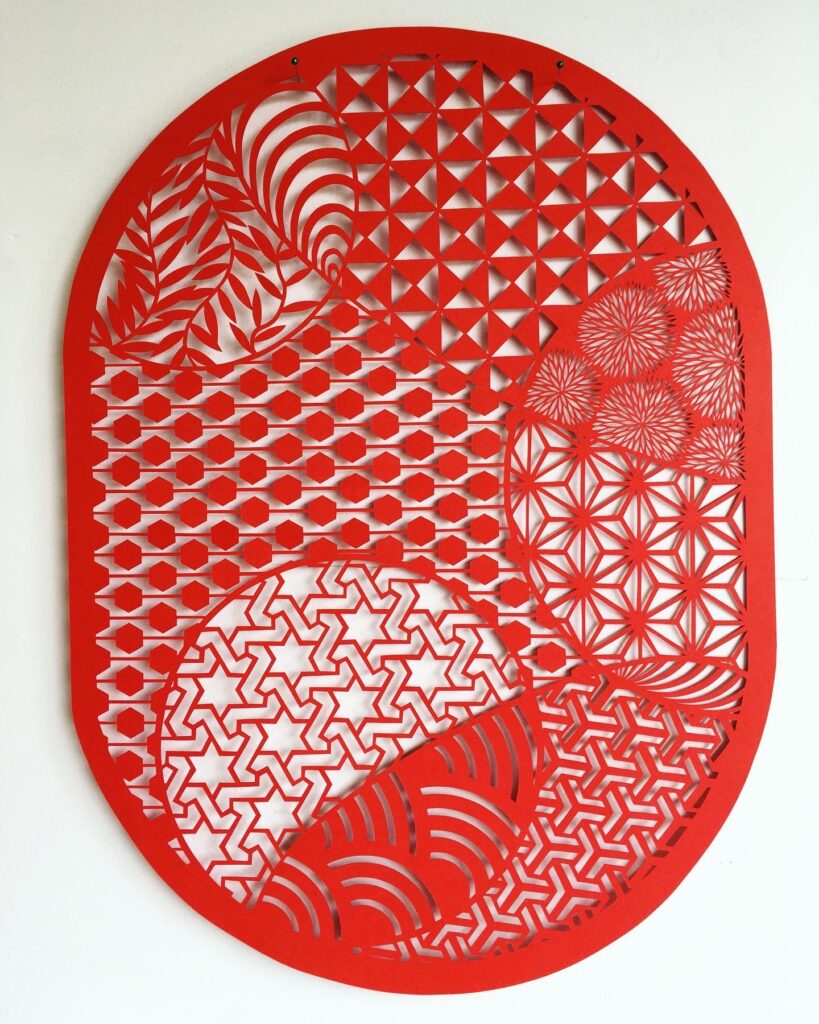
Pattern Mixing in Red

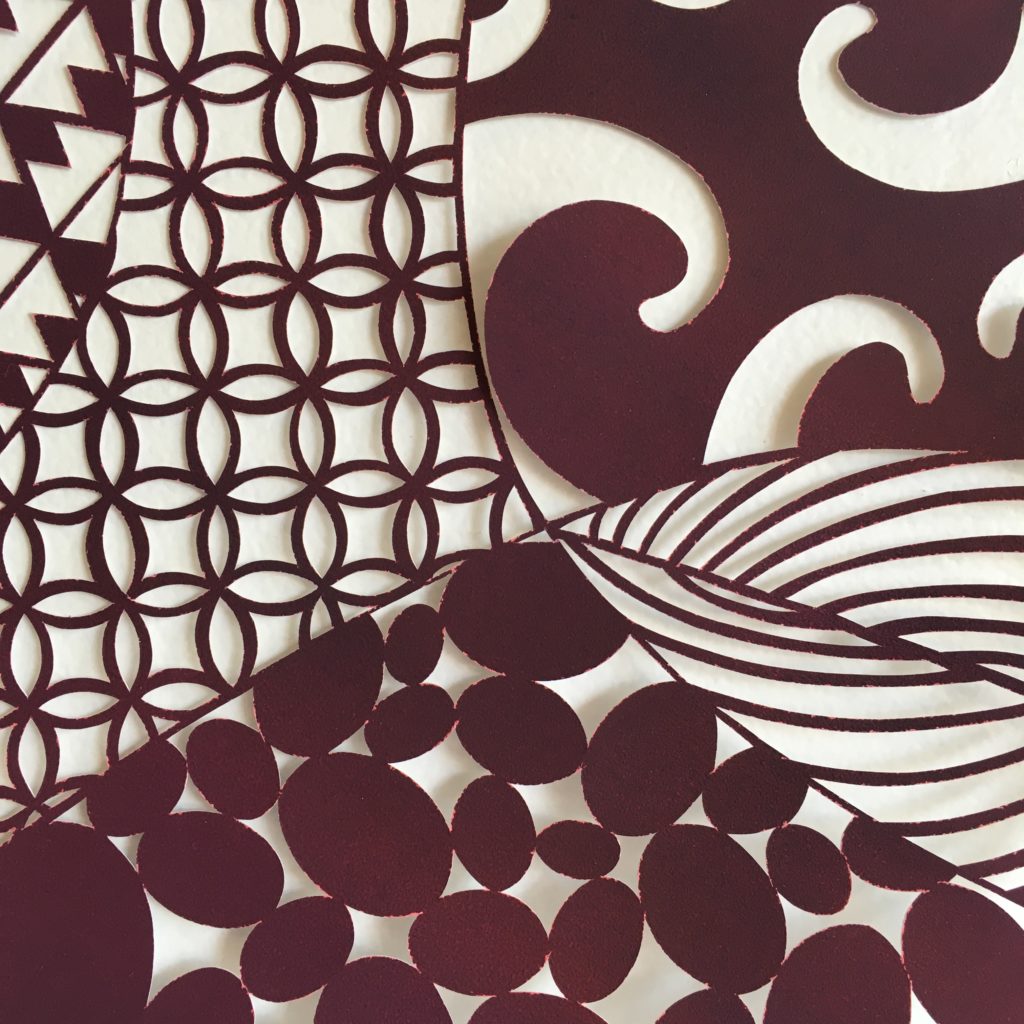
Every time I compose and cut a new pattern mixing piece I learn something new about composition flow and the structure of a pattern interpreted in cut paper. This piece is the most densely packed with lines and complex designs of all the ones created so far. It felt like it took a long time to draw, and then an even longer amount of time to cut.

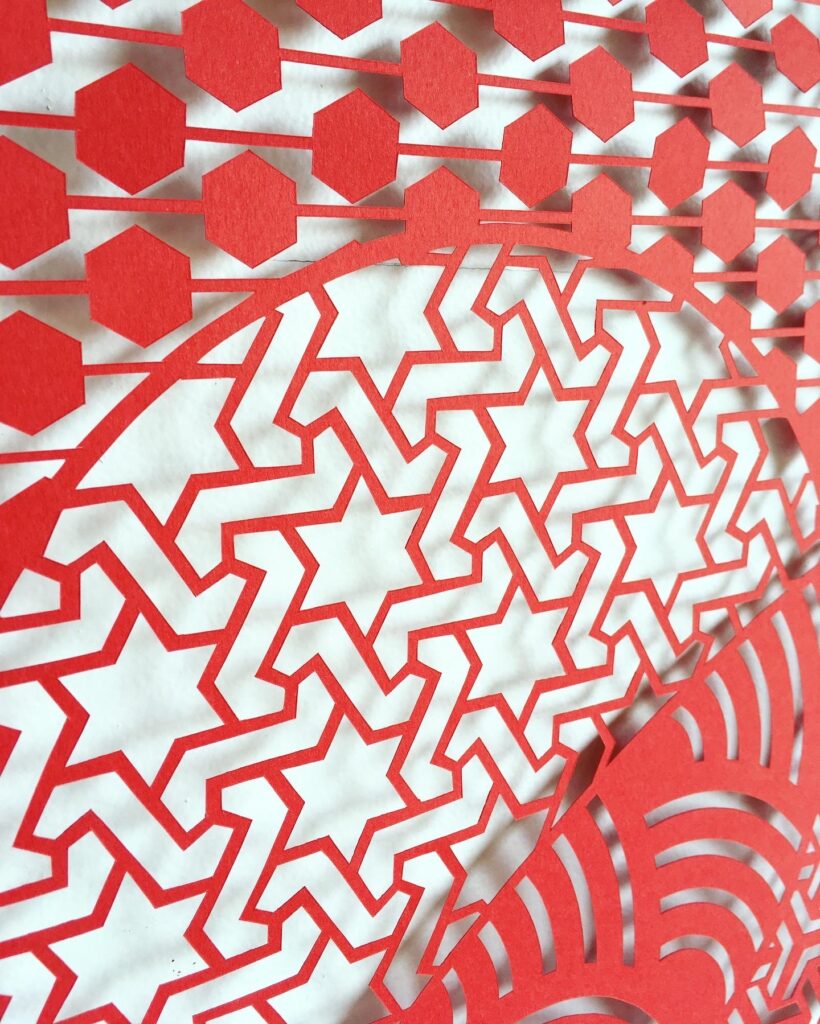
The hexagon pattern broken into lined squares is based upon a photo of a tiled floor my friend Barb shared with me through Instagram. I had to simplify the lines to make it work at the scale I was cutting.

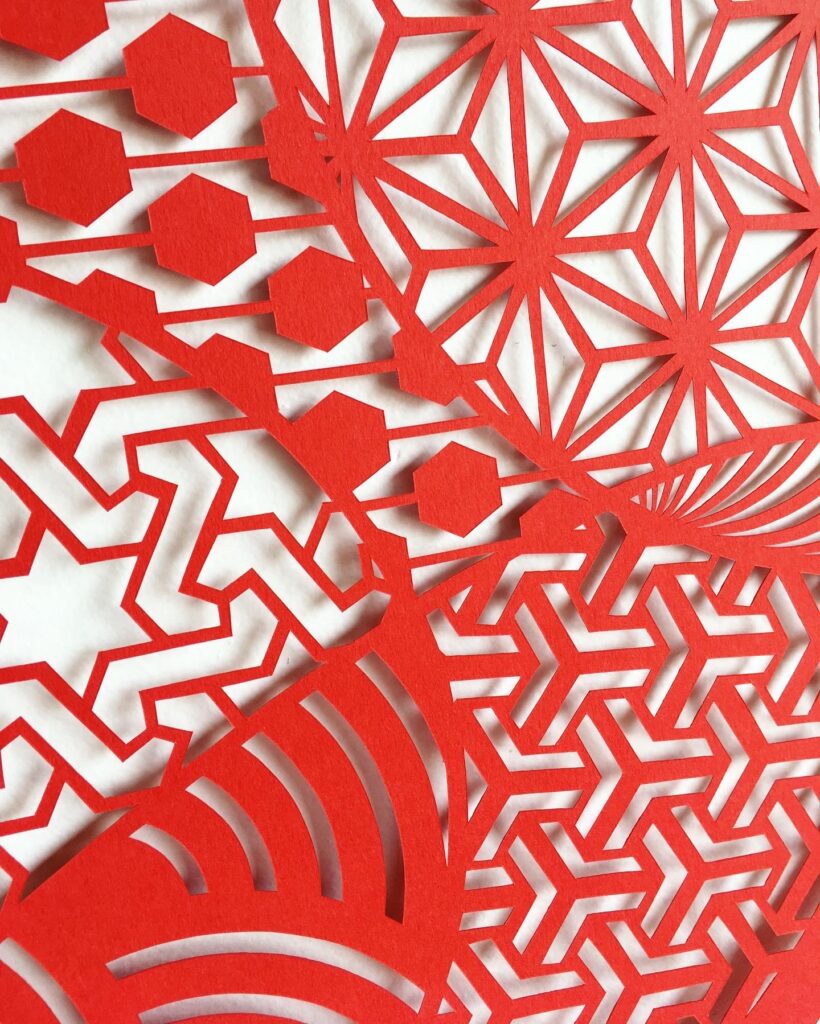
The pattern featured in the half-circle section below is based upon a Japanese textile pattern from a book on the subject. It was very challenging to draw because there are so many elements to it, and then even moreso to cut, for the same reason. I left that section until last because I knew it would take me the longest to get through. Sometimes this work is an endurance test.

The finished piece is hand-cut from Canson Mi-Teintes Bordeaux paper, and the actual size is 24 x 20.5 inches.

Pattern Mixing in Green

This pattern mixing piece in green paper began as a sketchbook drawing. I tried to stick as closely as possible to the original layout as I translated it into this larger piece. It’s the strangest shape I’ve worked with yet with its mix of sharp angles and curves.

My biggest struggle when drawing these is working with the French curve templates I have the are often slightly too small to cover the area I am trying to trace a line. I’ve figured out a way to make it work though. It’s also tricky to use my compass to draw partial circles because I can’t get it to expand as wide as I would like. I should look into whether I can find a larger version of both tools.

This piece has the most made-up-on-the-fly patterns (as I was drawing) of any of the work to date. I think because at this point I’d been thinking and looking at patterns enough that I could now come up with my own. I included one section of freeform cutting using my classic repeating crescent shape.

Pattern mixing in green (not the actual title) is hand-cut from Canson Mi-Tientes paper, and is 25 x 17.5 inches in size.

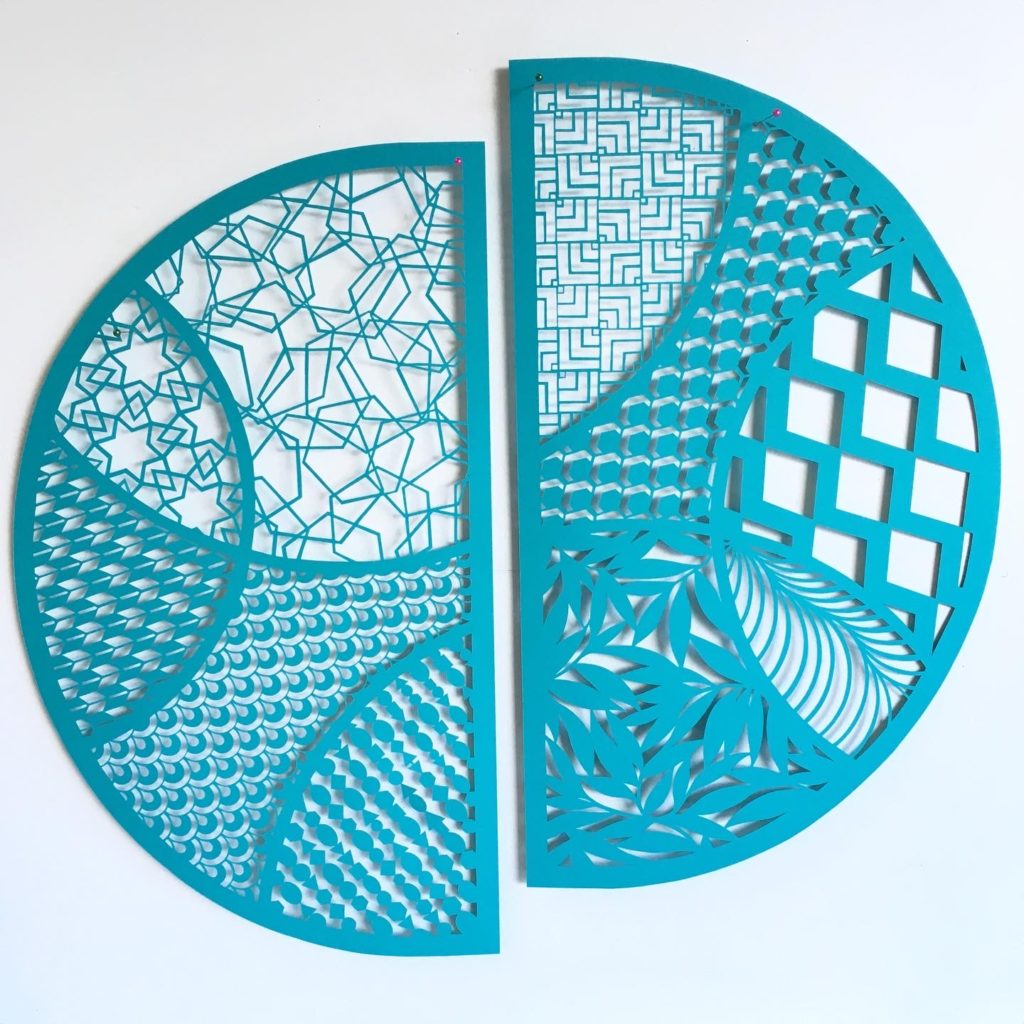
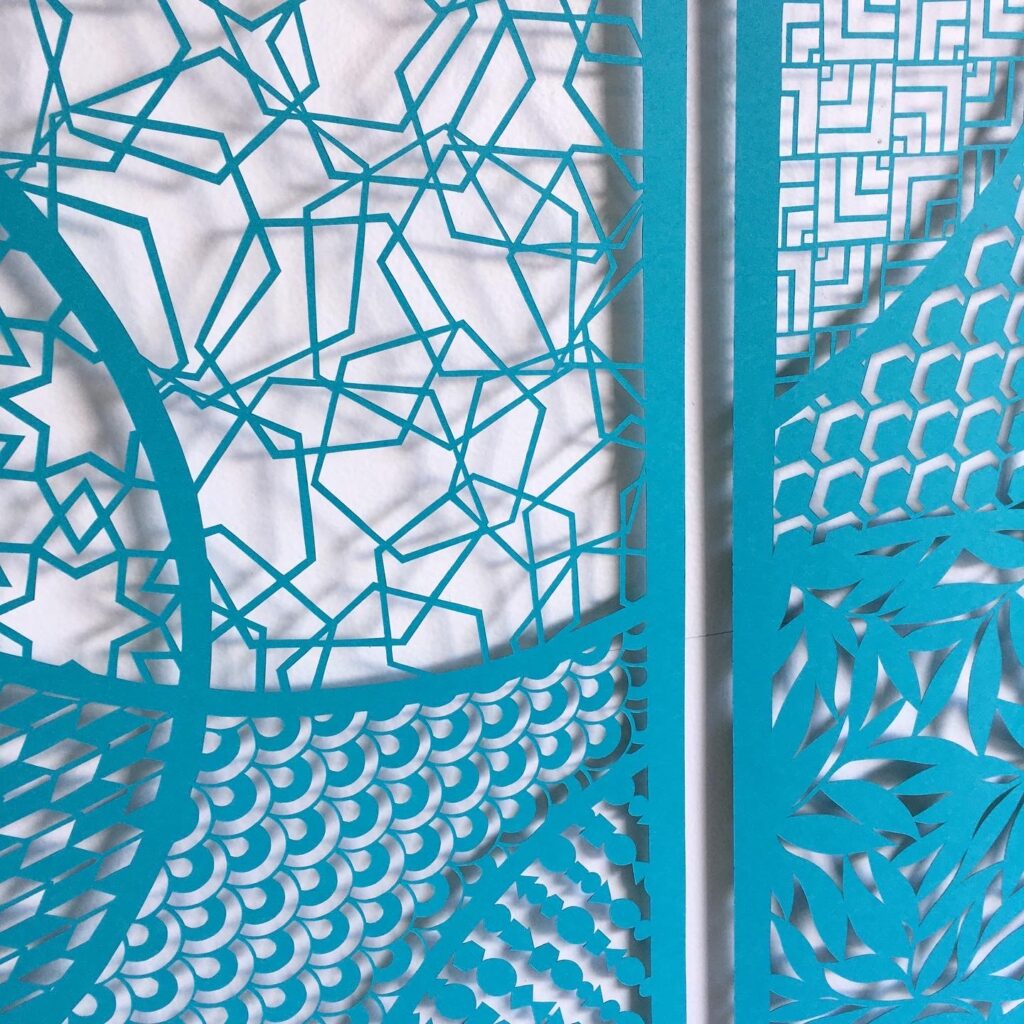
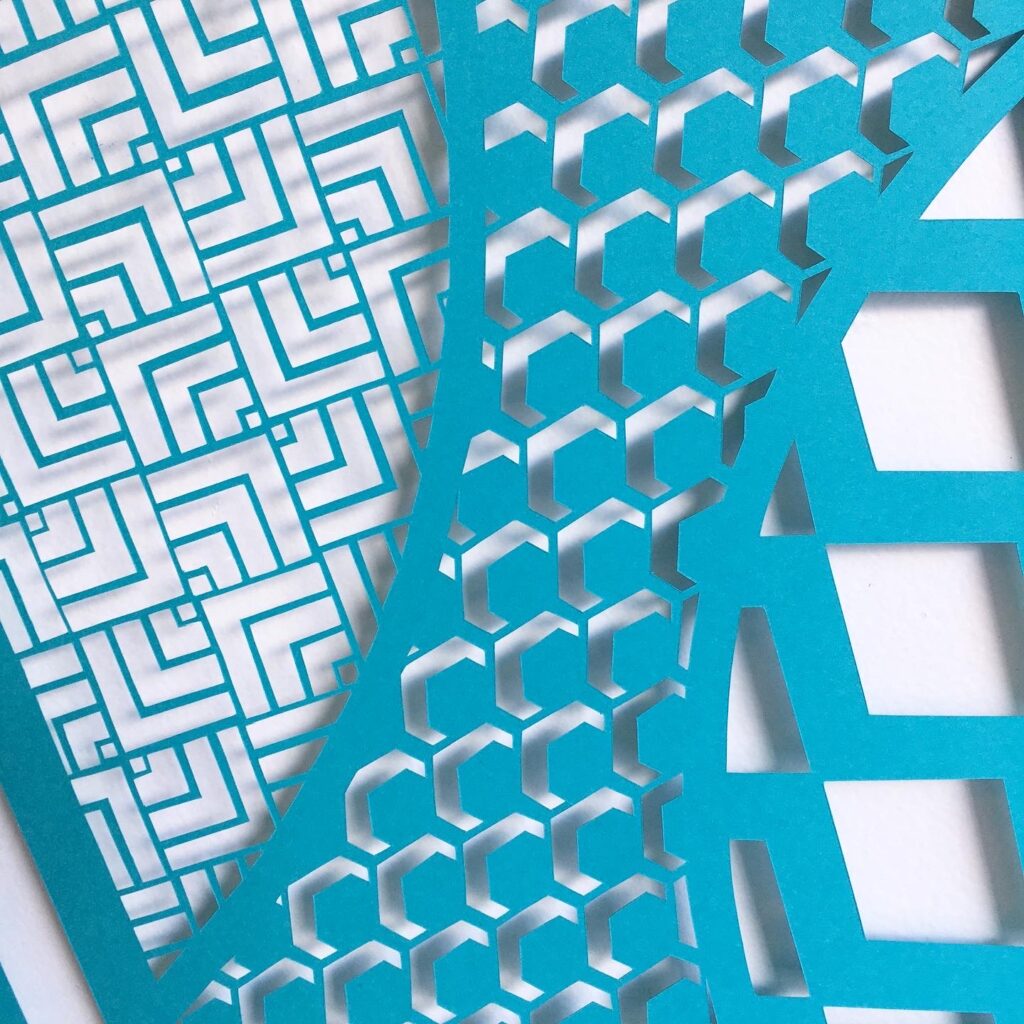
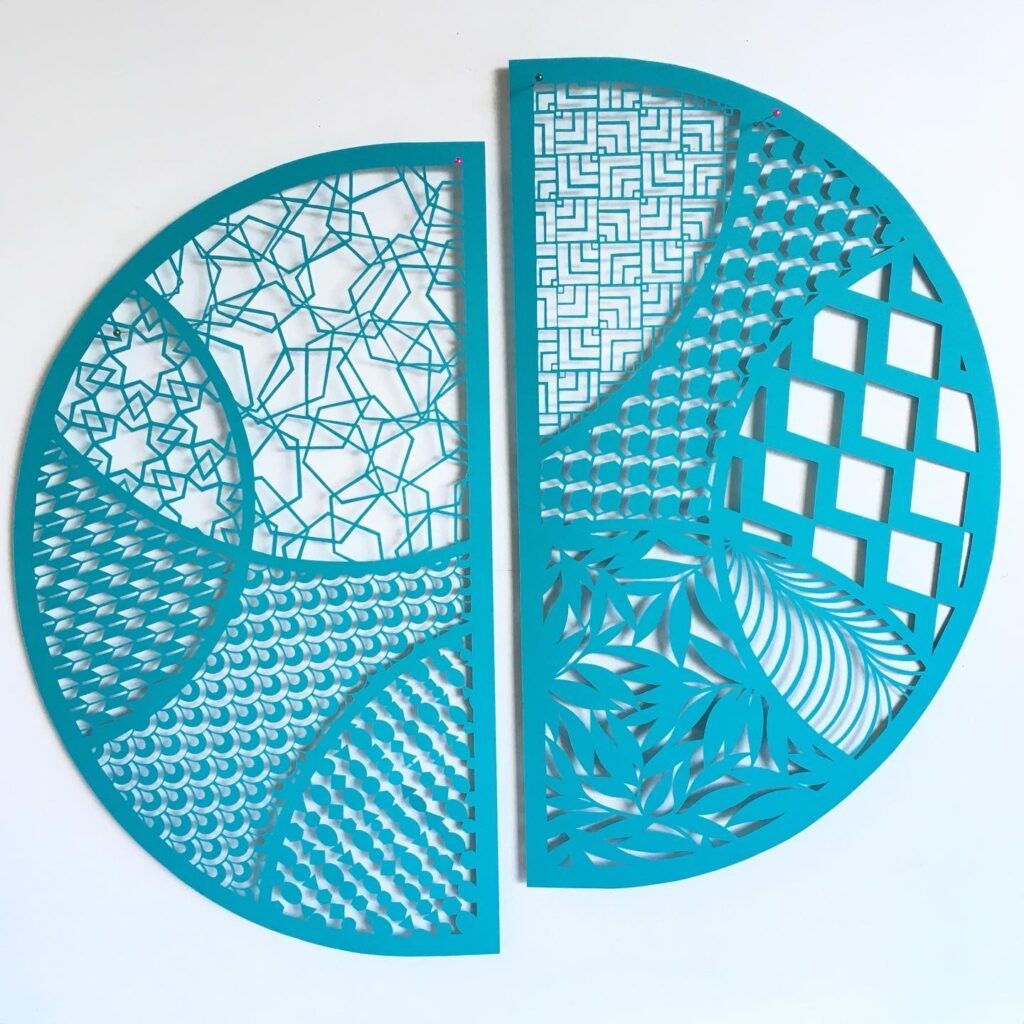
Pattern Mixing Diptych in Turquoise

Earlier today I was looking at the sketchbook drawing this piece is based upon and realized how much more complex it became in the final version. It was always a diptych but the paper cut version walked away with additional sections and way more elaborate patterning.

This turquoise blue paper is my number one favourite of all the colours in the Canson Mi-tientes range. (It is sooooooo goooooood). I could use it again and again to make all sorts of things.

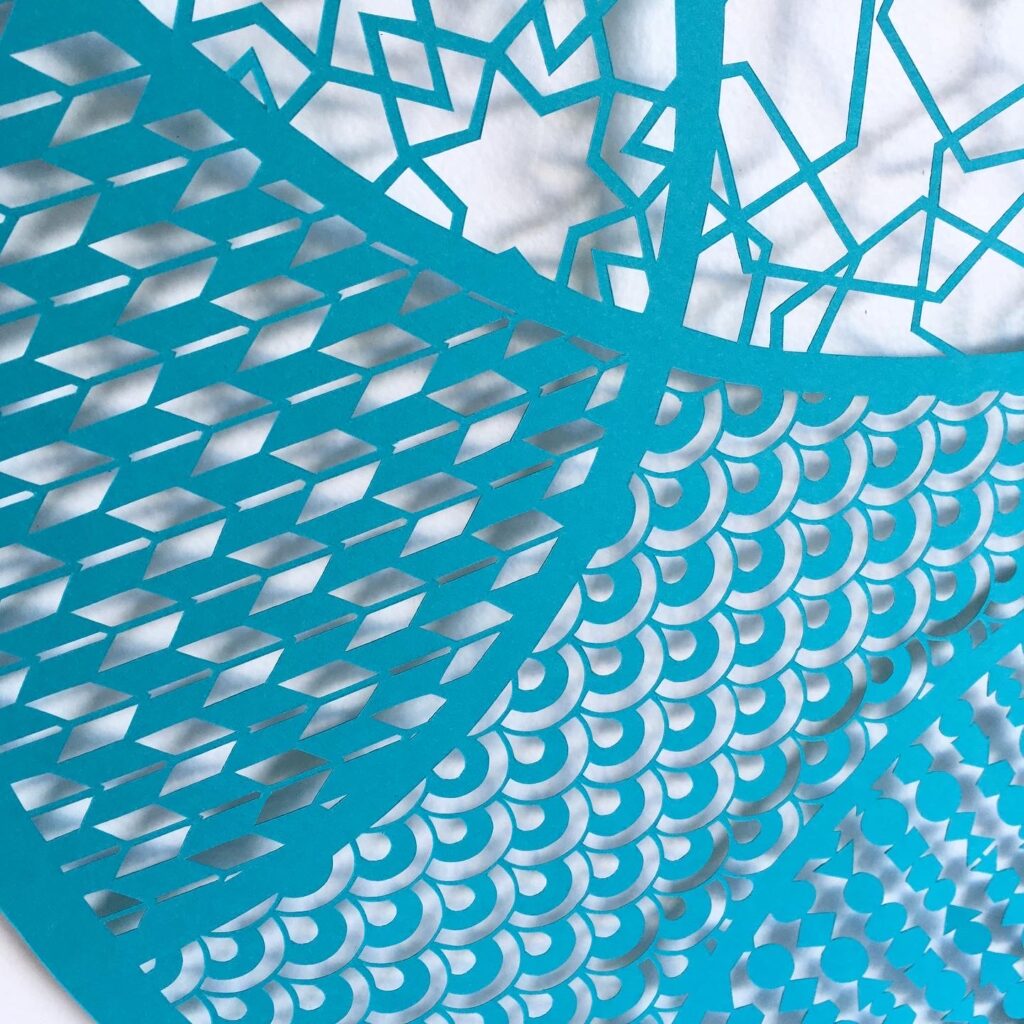
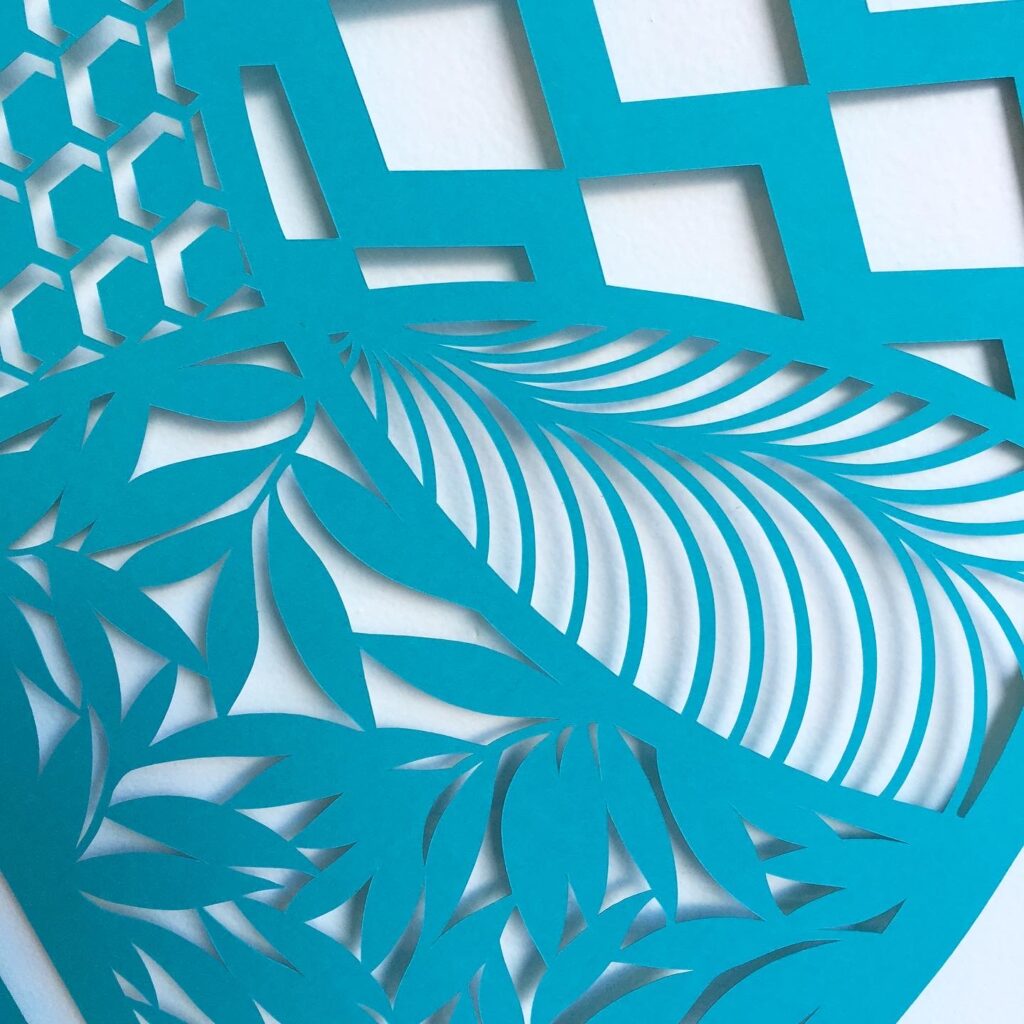
With this piece I really started to consider the line weight of each pattern, which is something tricky to figure out in the drawing stage. I like that the upper sections of both half-circles have sections that are matching in airiness because the paper is mostly cut away, while the sections below are more dense. This was not planned, so clearly dumb luck panned out well with this piece.

The final version is hand-cut from Canson Mi-teintes paper, and each one is 18 inches by 10 inches.

Pattern Mixing in Poppy Orange

This is the second in my new series of pattern mixing paper cut pieces. I finished this piece in late June, and was super jazzed about how beautiful it turned out. The paper is a vibrant Poppy Orange and the patterns play together in an energetic way that is pleasing to the eye.

I hand drew most of the patterns in this piece but I also decided to use some previously cut paper pieces as stencils to trace some of the most complicated ones – like the Islamic geometric pattern inside the circle. Those ones always feel intimidatingly complicated to hand draw.

This piece is another that began as an idea in my sketchbook, exploring composition and a pretty crude mixing of pattern ideas. It’s been so helpful to have these drawings, capturing ideas, to refer back to when working on a more refined and finished piece.

The lozenge is hand-cut from Canson Mi-teintes paper, and the finished size is 22″ x 16.5″.

Pattern Mixing Cut and Ink Test

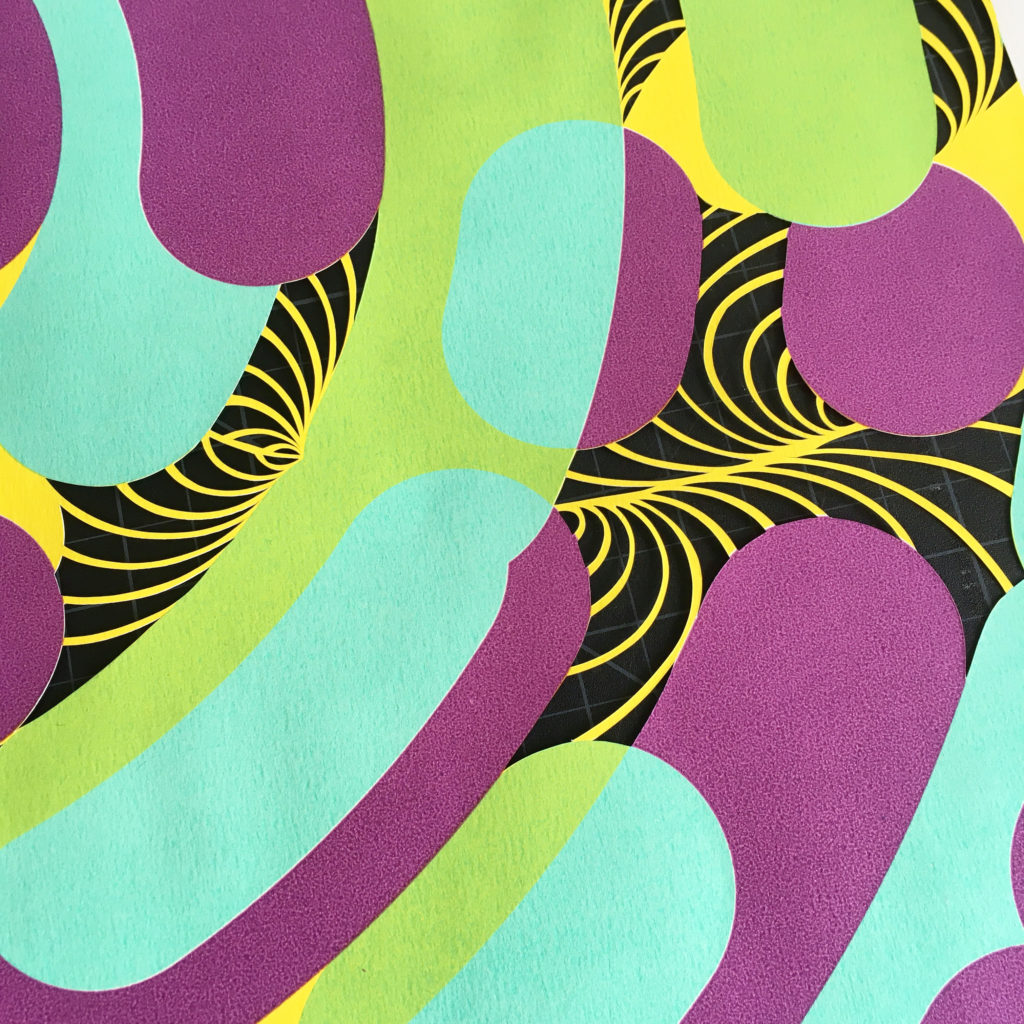
The paper I often use in my work comes in a pretty limited range of colours, and I’ve been trying to figure out if I can customize this by painting or printing on the paper. It’s tricky because the Canson Mi-Teintes paper warps and buckles with the addition of wet mediums because it isn’t made for painting or printing.

I was inspired by another artist to try rolling ink and acrylic paint onto the paper to add smooth flat colour (which is what I actually want). I tried it out on two different types of paper I use in my work, and it was mixed results.

I made this pattern mixing piece from one of these ink rolling experiments on Mixed Media paper but the results aren’t great on closer inspection. The ink and paint sit on the surface and flaked off at the edge of every single cut line. It made for very messy work with these small flakes covering my cutting matt and hands as I worked.

The piece itself was an experiment in quickly putting together a pattern mixing piece as a test of the idea, to move from sketchbook drawings to a completed piece of work.