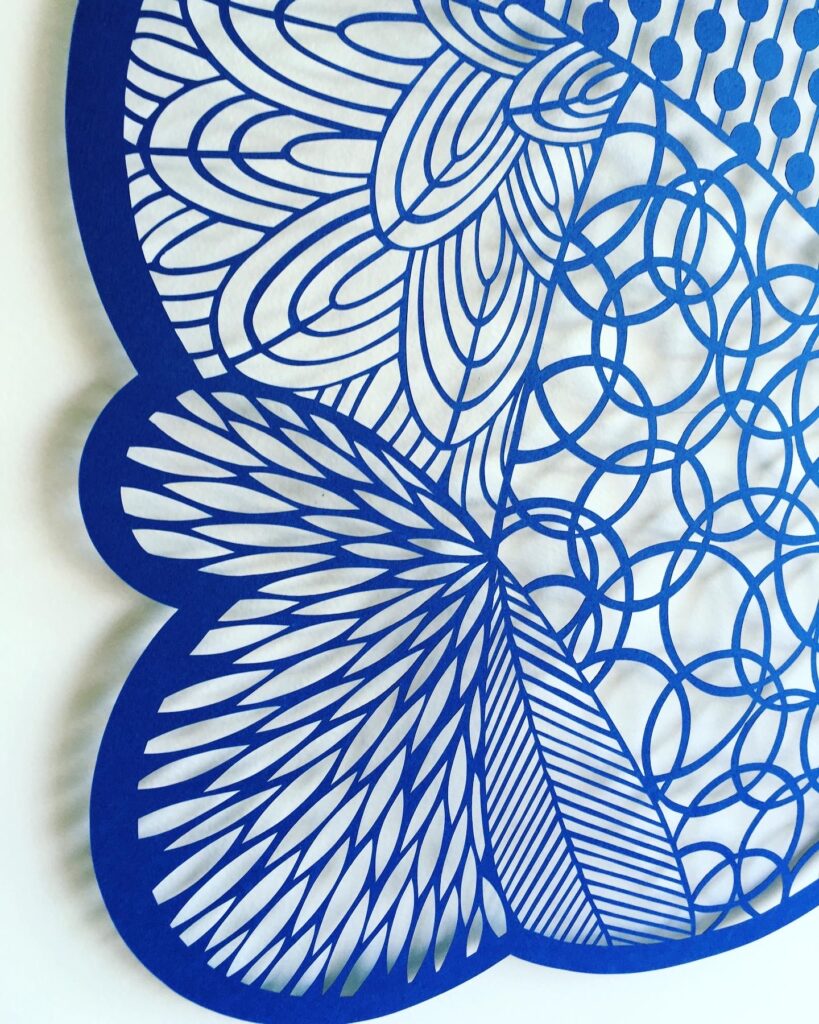
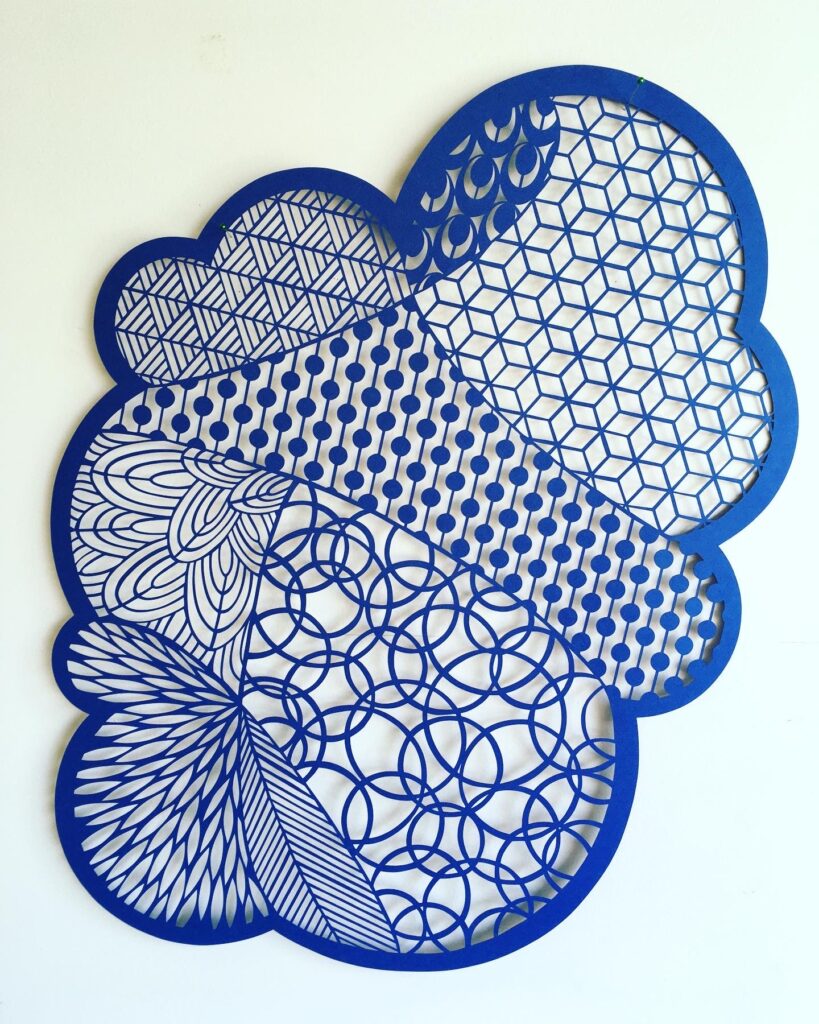
First Saturday Open Studios – Nov 7th, 2020

I’ll be participating in First Saturday Open Studios this Saturday November 7th, noon to 5pm. Visit me along with special guest star, talented fellow paper artist Crissy Arseneau, at 1610 Clark Drive, Unit 201. It’s a lovely opportunity to share in an afternoon of art while getting a start on your holiday shopping or picking up a little something to brighten your own space!
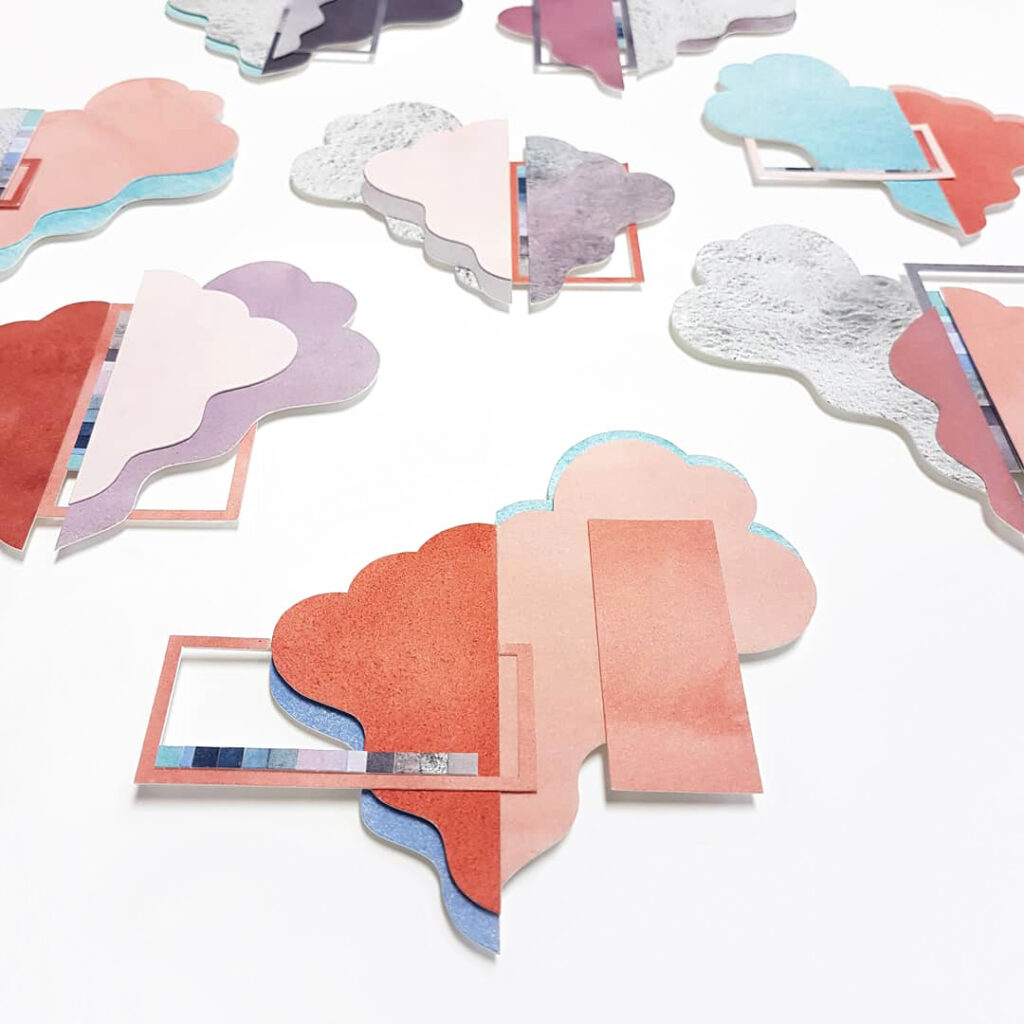
Cloud City group by Crissy Arseneau

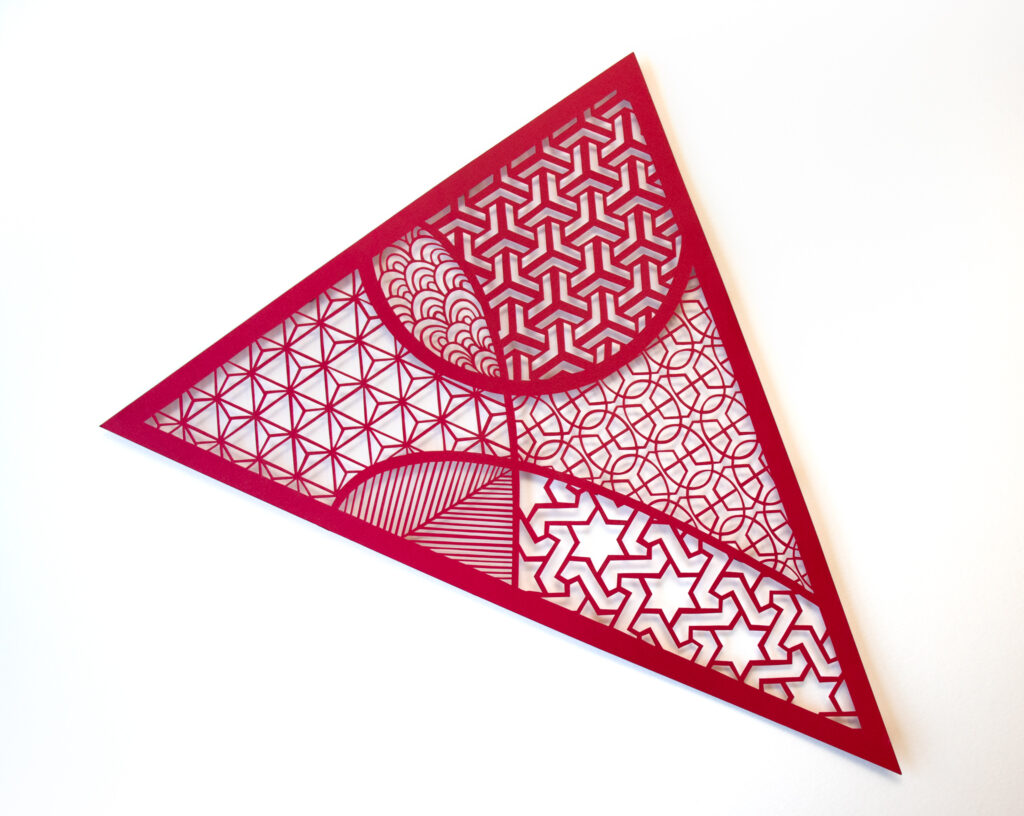
Pattern Mixing series, Rachael Ashe

To facilitate a safe and comfortable environment for all visitors, we ask that everyone wear a mask and sanitize their hands prior to entering the building. The studio is quite spacious and, as First Saturday is a fairly relaxed event, we don’t anticipate large numbers of visitors at once so maintaining physical distancing should be a breeze! However, if you’d like to schedule an appointment with either of us, please contact Crissy or myself and we’ll do our best to accommodate. We’re looking forward to hosting you!

Visit FirstSaturday.ca for the full list of participating artists around Vancouver, North Vancouver, and New Westminster »

First Saturday Open Studios
Dates: Saturday November 7th, 2020
Time: noon to 5pm
Location: 1610 Clark Drive, Unit 201 (rear entrance)
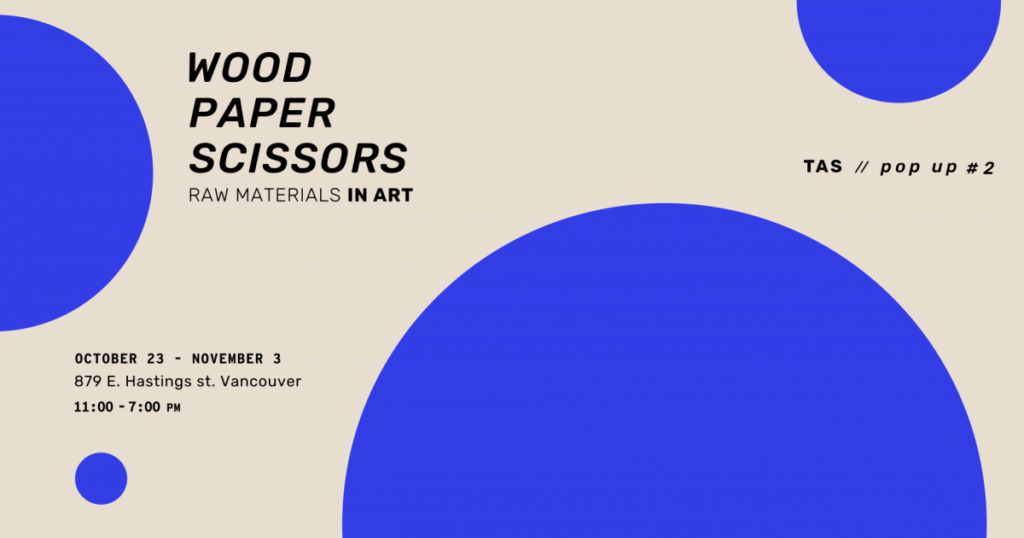
Wood Paper Scissors: Raw Materials in Art

I’m thrilled to be working with The Art Shop and participating in their second pop-up group exhibition of the year. Wood Paper Scissors: Raw Materials in Art, will feature a brand new series of pattern mixing paper-cuts I’ve been working on over the summer and fall. My work can also be purchased through their online shop.


Participating artists:
Rachael Ashe, Lydia Cecilia, Ben Evely, Susan Jessop, Aaron Moran, David Ullock, and Kalvin Valko.

The Art Shop (TAS) presents its second Pop Up exhibition of local emerging artists in Vancouver. Wood, Paper, Scissors: Raw Materials in Art, aims to demonstrate and facilitate an approach to viewing and understanding contemporary art starting from its materiality. Exhibiting artists whose artistic process includes the use of what could be perceived as uncommon materials, the exhibition illustrates the immense possible definitions of what constitutes a work of art.
The participating artists work with materials of strong and natural qualities; from repurposed wood, to hand dyed fabrics, to paper cutting and collage. Transforming what was once its own raw entity into a work of art – the artists reconsider, repurpose, and redefine how art can differ from the traditional paint on canvas. The physical and technical aspects become the focus, allowing an access point for the viewer to recognize and relate to the artworks.

Wood Paper Scissors: Raw Materials in Art
Dates:
October 23rd to November 3rd
Time: 11am to 7pm every day
Location: 879 East Hastings Street
Website: theartshop.ca

Artist Interview Series with Tristesse Seeliger

My friend and fellow artist, Tristesse Seeliger, has been creating a series of artist interviews over the past several months. I’ve been enjoying watching them, especially this one with Megan Majewski, and this one with Sara Khan, as they give an excellent peek into their thought process and the inspiration behind their work. I was thrilled to join the ranks of interviewees, and you can watch the results below.

A HUGE thank you to Tristesse for including me in the series. She’s put an incredible amount of work into creating these videos. Visit her website or follow her on Instagram.

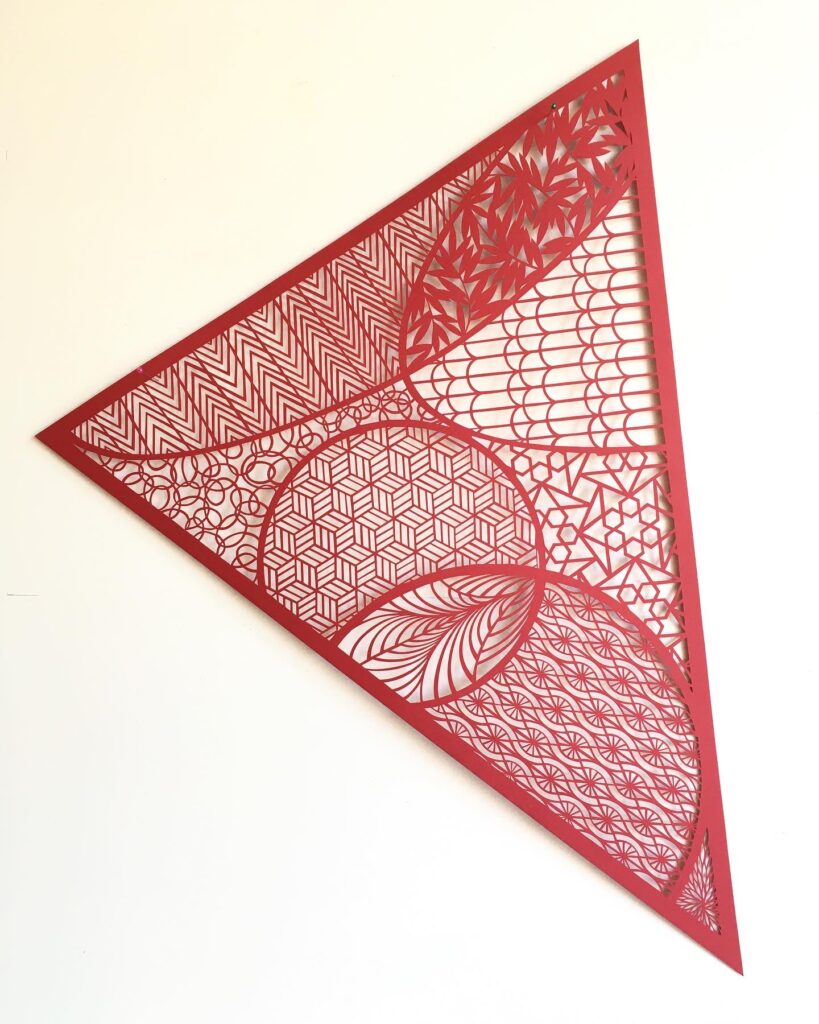
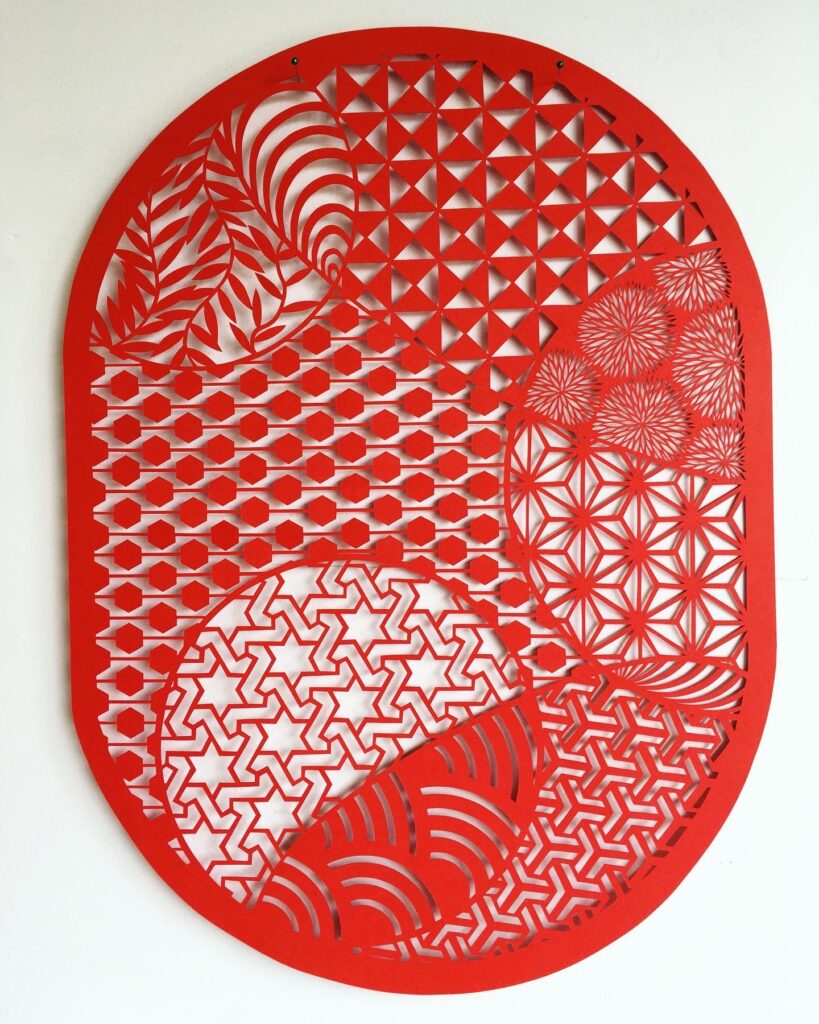
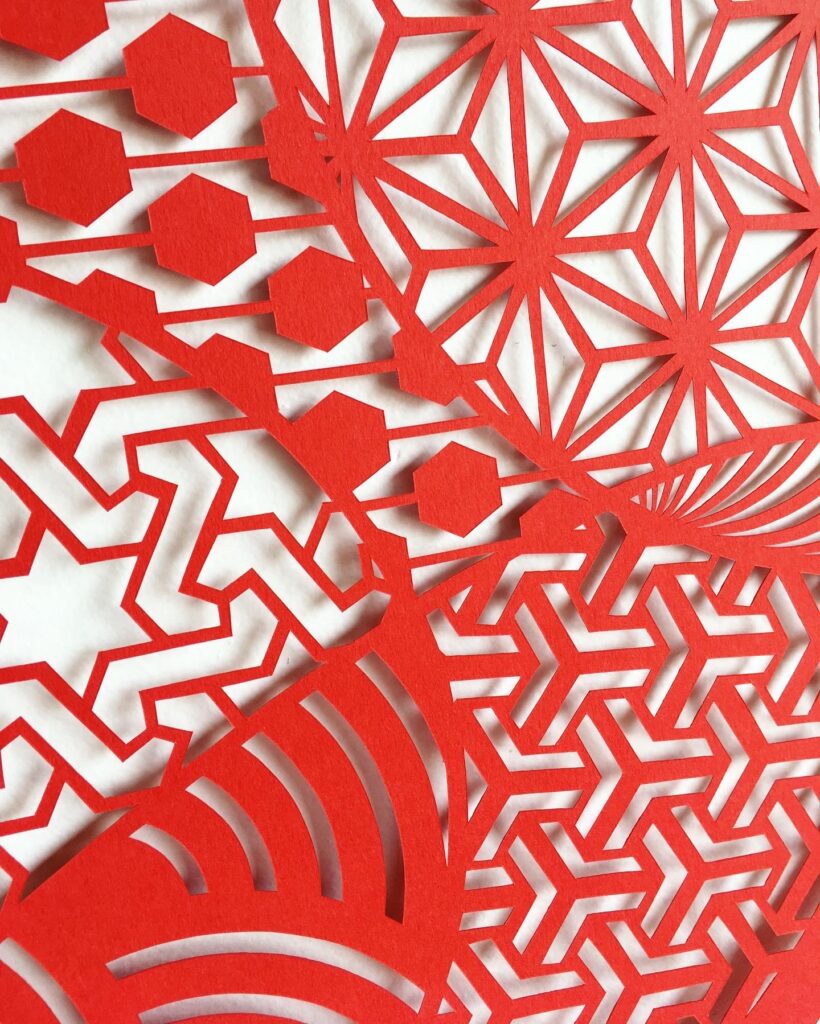
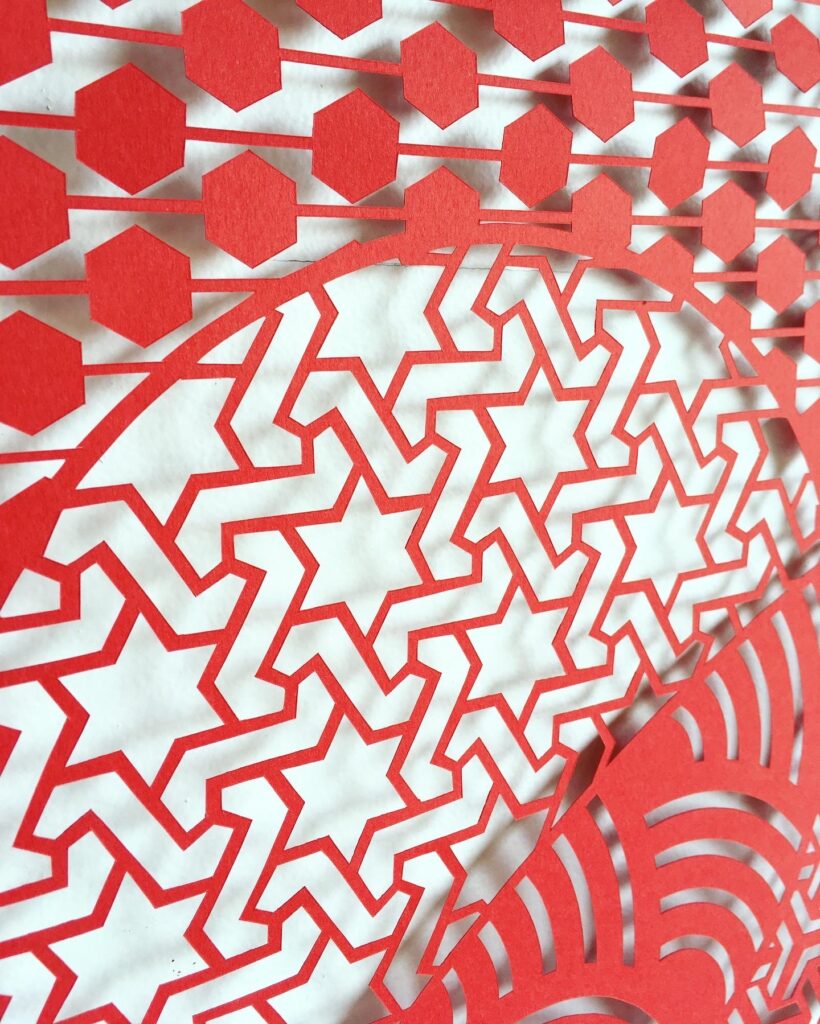
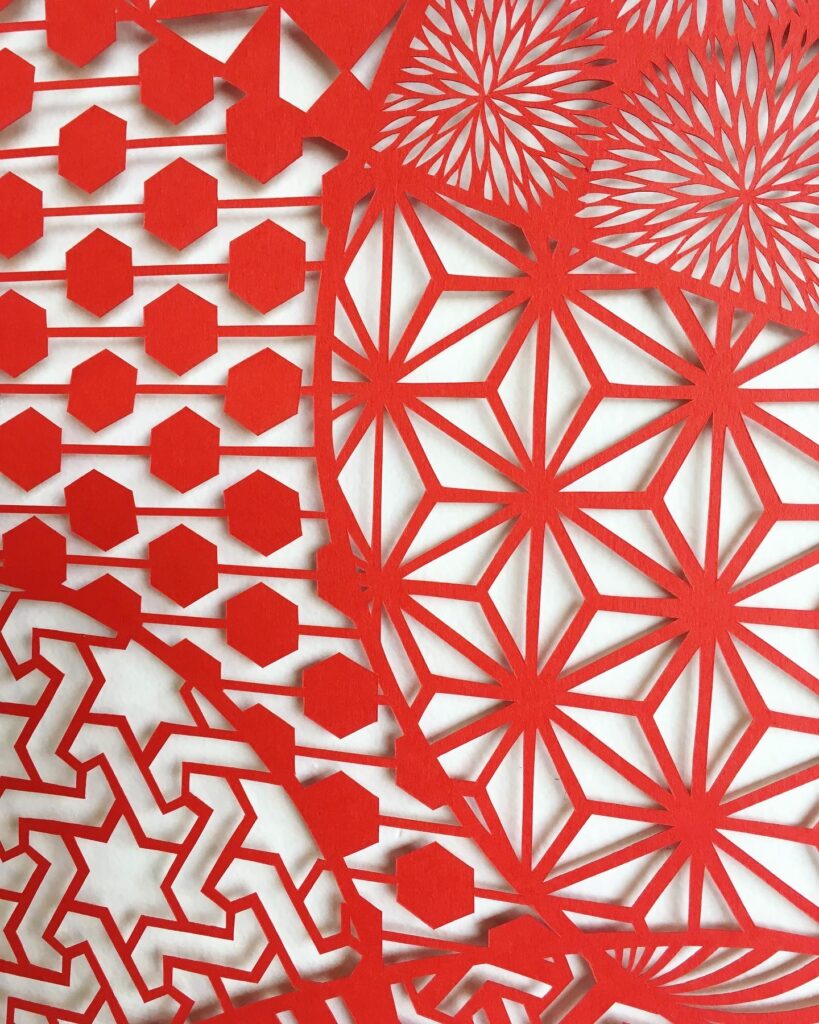
Pattern Mixing in Red

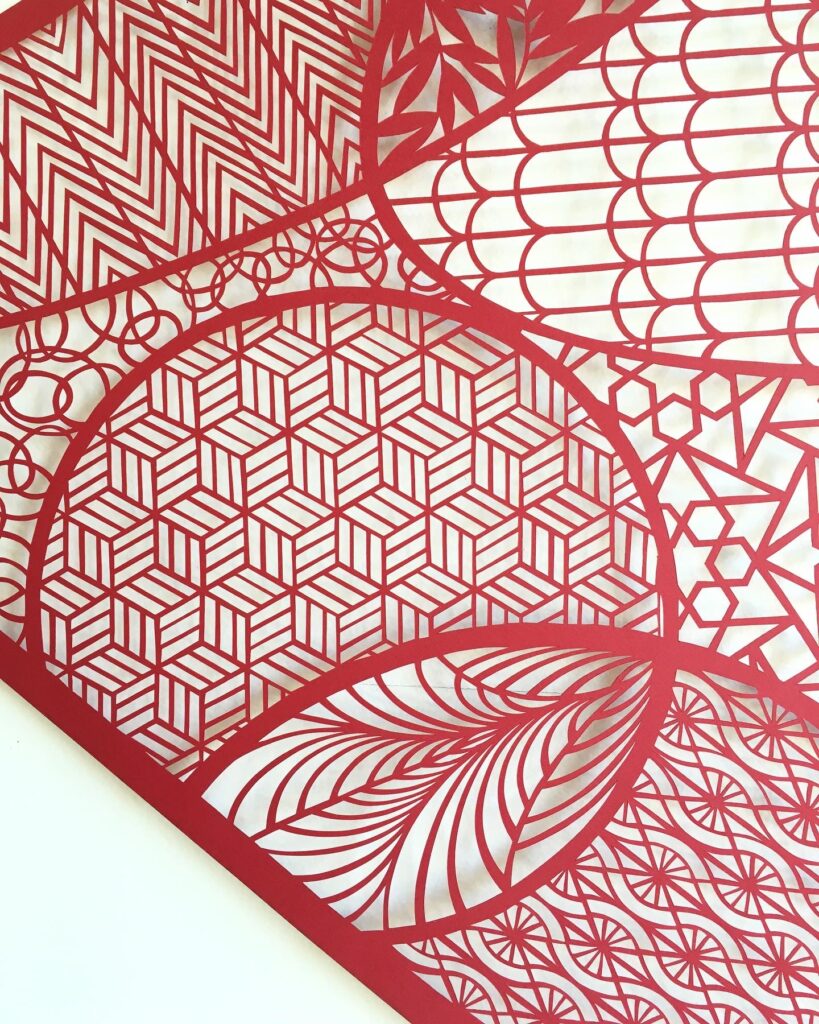
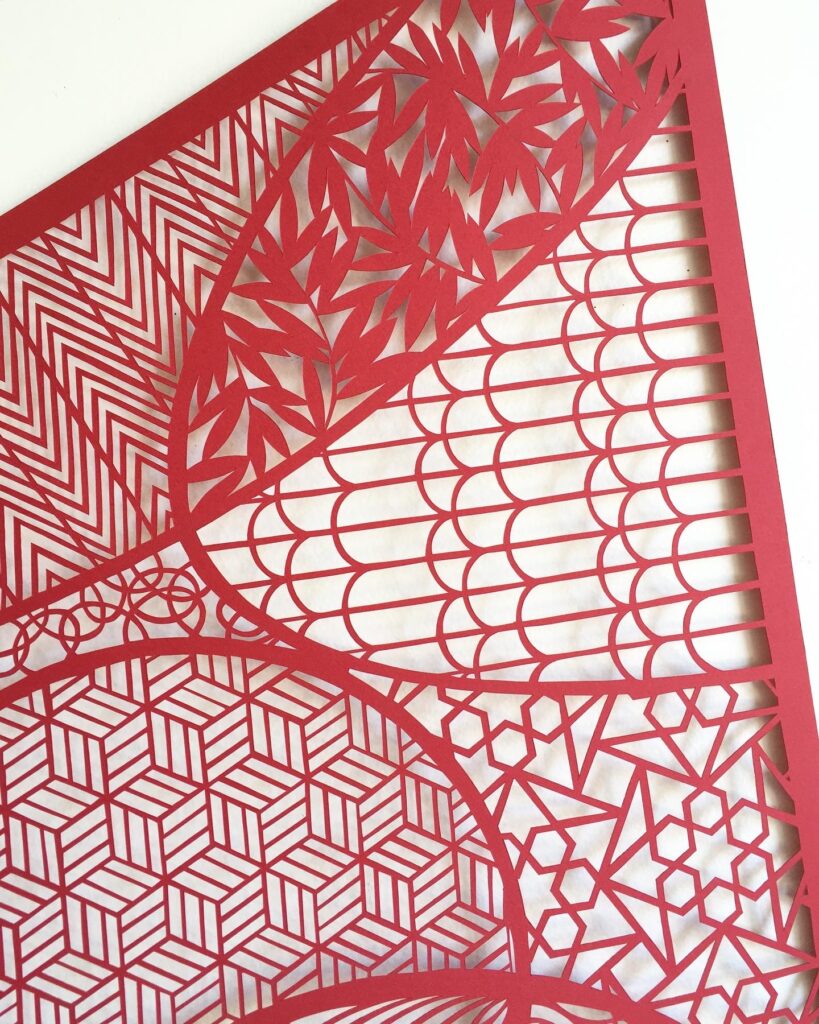
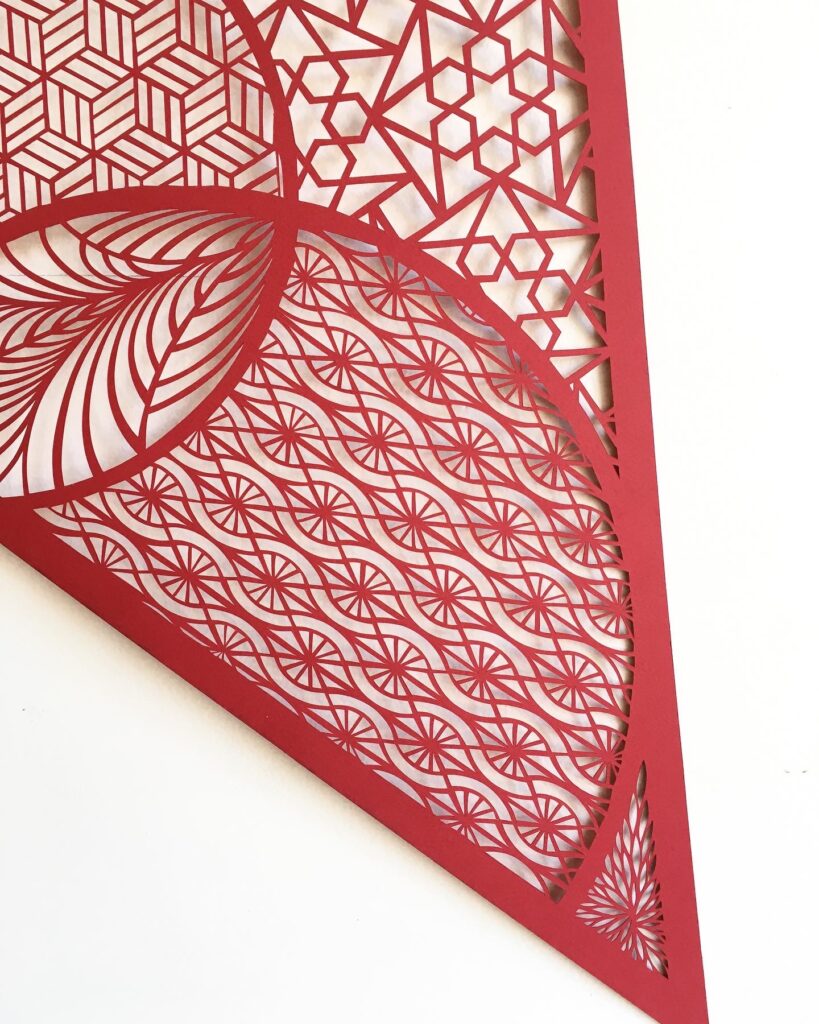
Every time I compose and cut a new pattern mixing piece I learn something new about composition flow and the structure of a pattern interpreted in cut paper. This piece is the most densely packed with lines and complex designs of all the ones created so far. It felt like it took a long time to draw, and then an even longer amount of time to cut.

The hexagon pattern broken into lined squares is based upon a photo of a tiled floor my friend Barb shared with me through Instagram. I had to simplify the lines to make it work at the scale I was cutting.

The pattern featured in the half-circle section below is based upon a Japanese textile pattern from a book on the subject. It was very challenging to draw because there are so many elements to it, and then even moreso to cut, for the same reason. I left that section until last because I knew it would take me the longest to get through. Sometimes this work is an endurance test.

The finished piece is hand-cut from Canson Mi-Teintes Bordeaux paper, and the actual size is 24 x 20.5 inches.

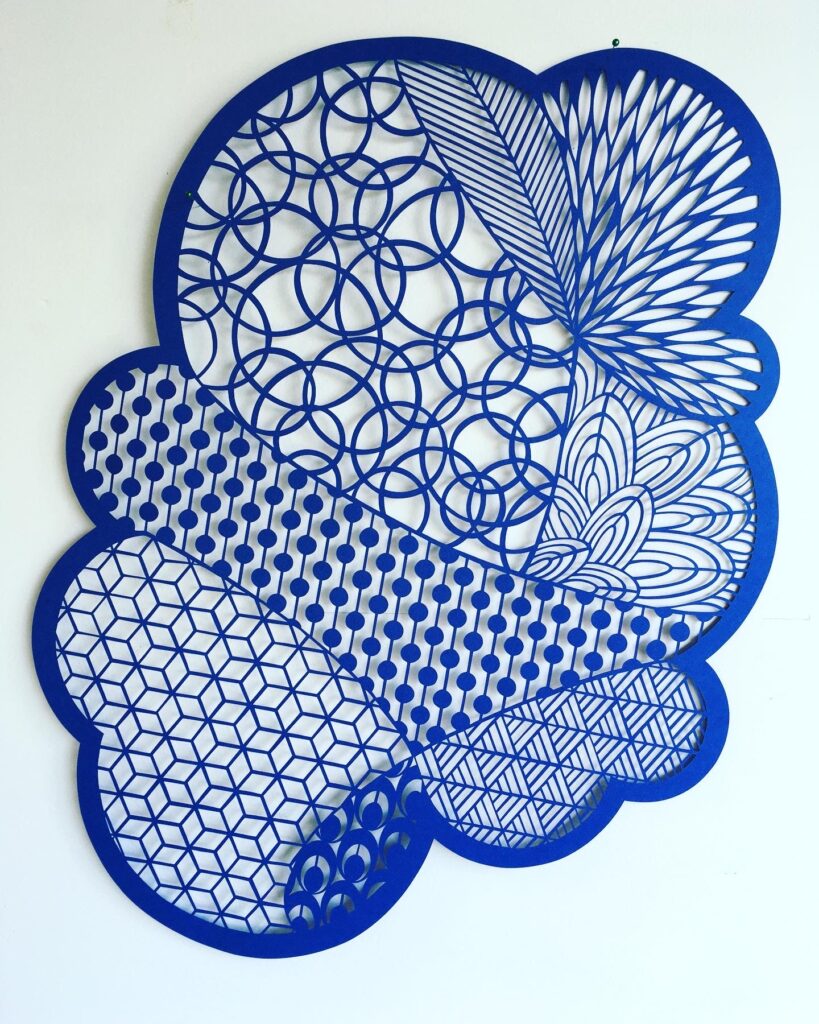
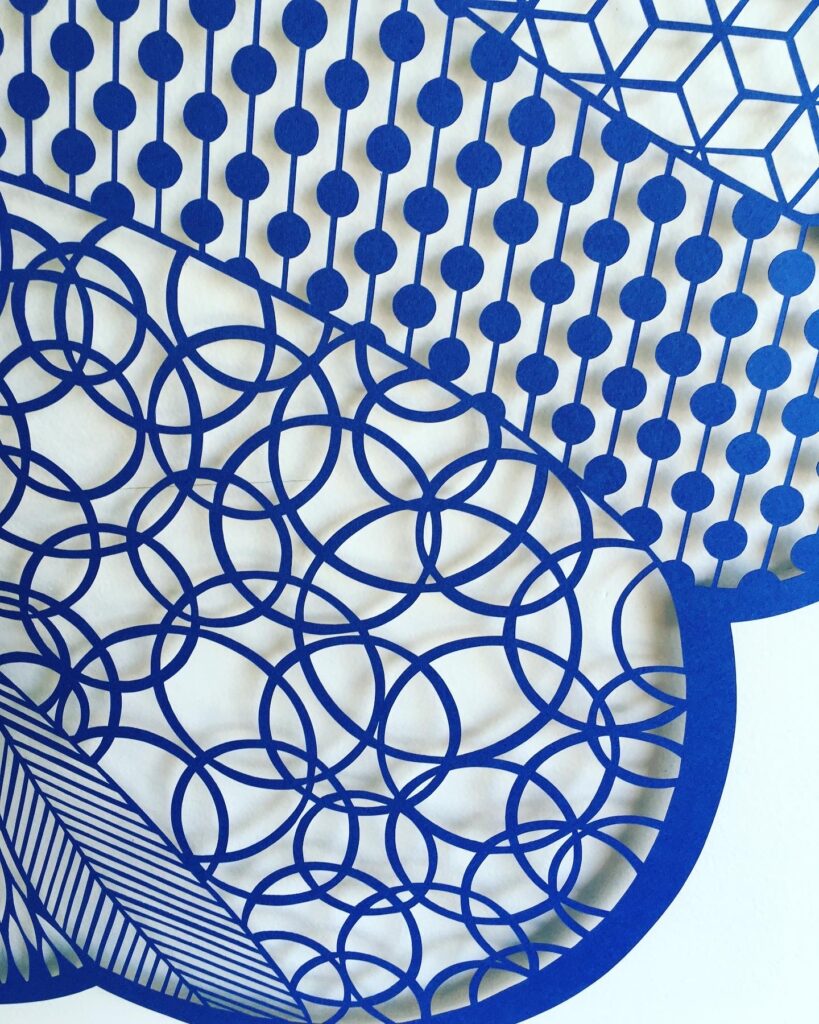
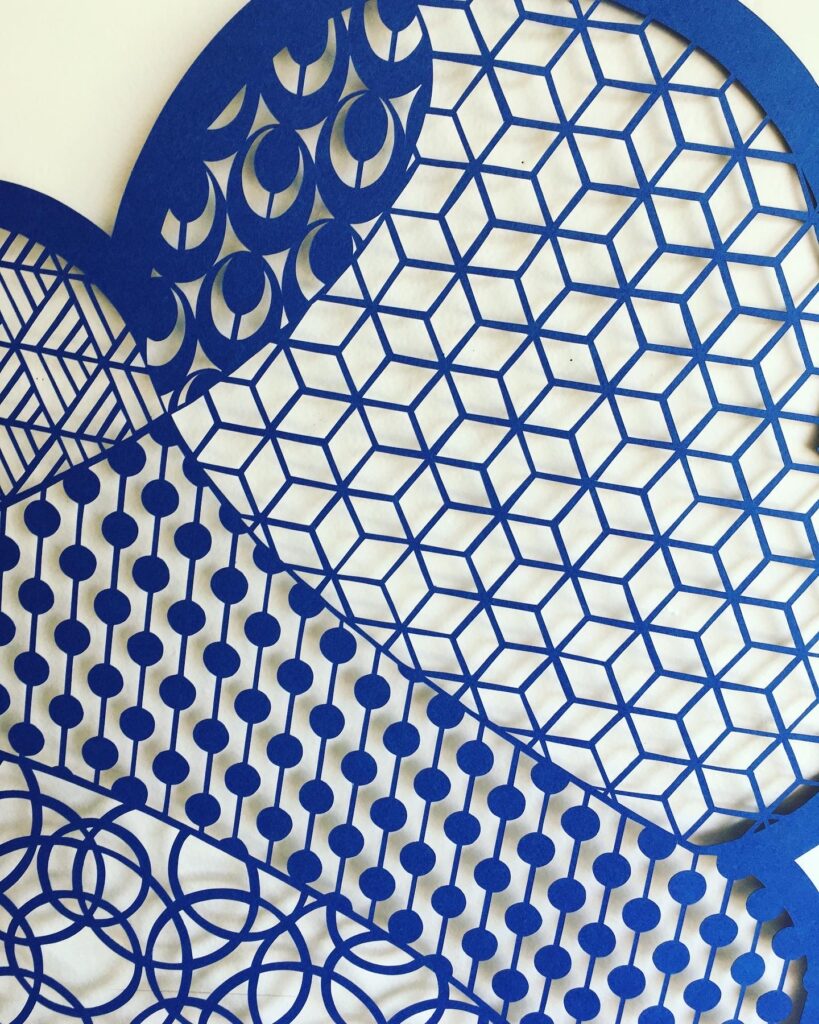
Pattern Mixing in Green

This pattern mixing piece in green paper began as a sketchbook drawing. I tried to stick as closely as possible to the original layout as I translated it into this larger piece. It’s the strangest shape I’ve worked with yet with its mix of sharp angles and curves.

My biggest struggle when drawing these is working with the French curve templates I have the are often slightly too small to cover the area I am trying to trace a line. I’ve figured out a way to make it work though. It’s also tricky to use my compass to draw partial circles because I can’t get it to expand as wide as I would like. I should look into whether I can find a larger version of both tools.

This piece has the most made-up-on-the-fly patterns (as I was drawing) of any of the work to date. I think because at this point I’d been thinking and looking at patterns enough that I could now come up with my own. I included one section of freeform cutting using my classic repeating crescent shape.

Pattern mixing in green (not the actual title) is hand-cut from Canson Mi-Tientes paper, and is 25 x 17.5 inches in size.

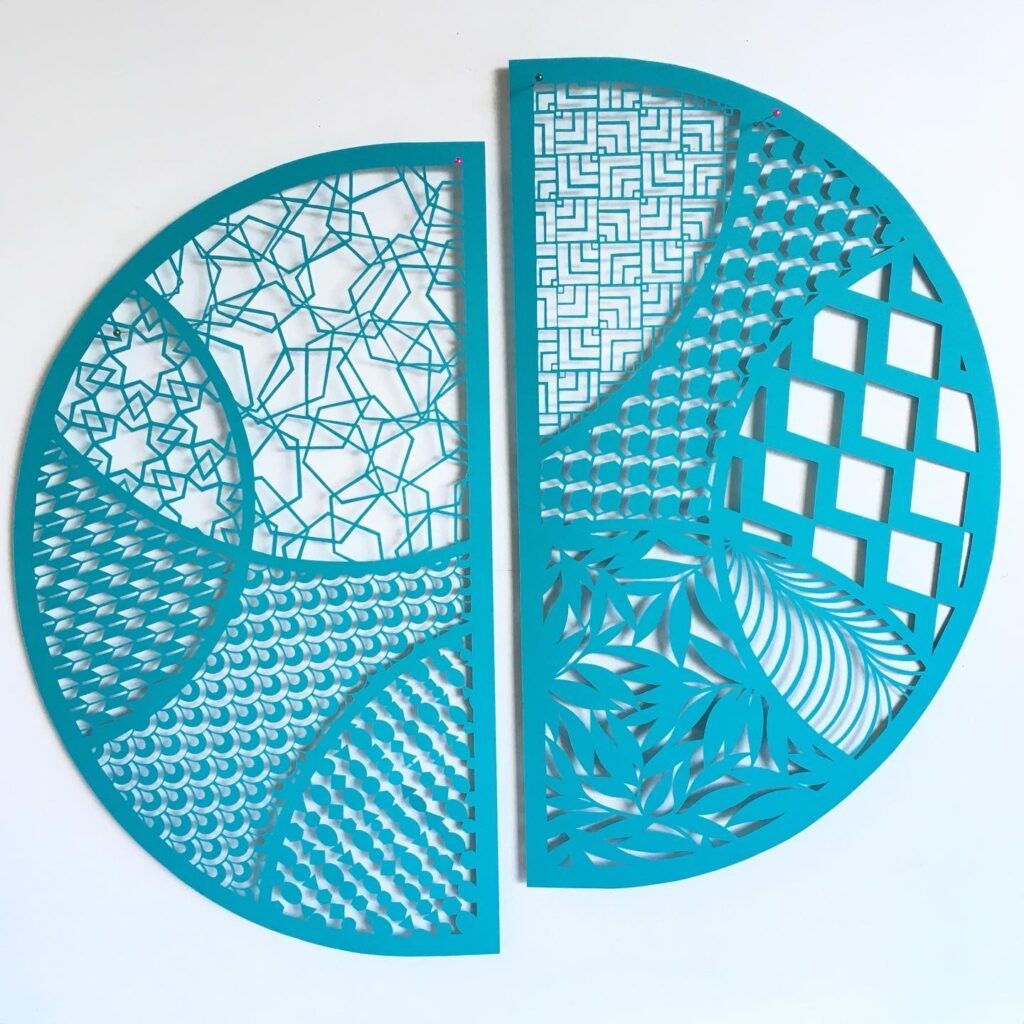
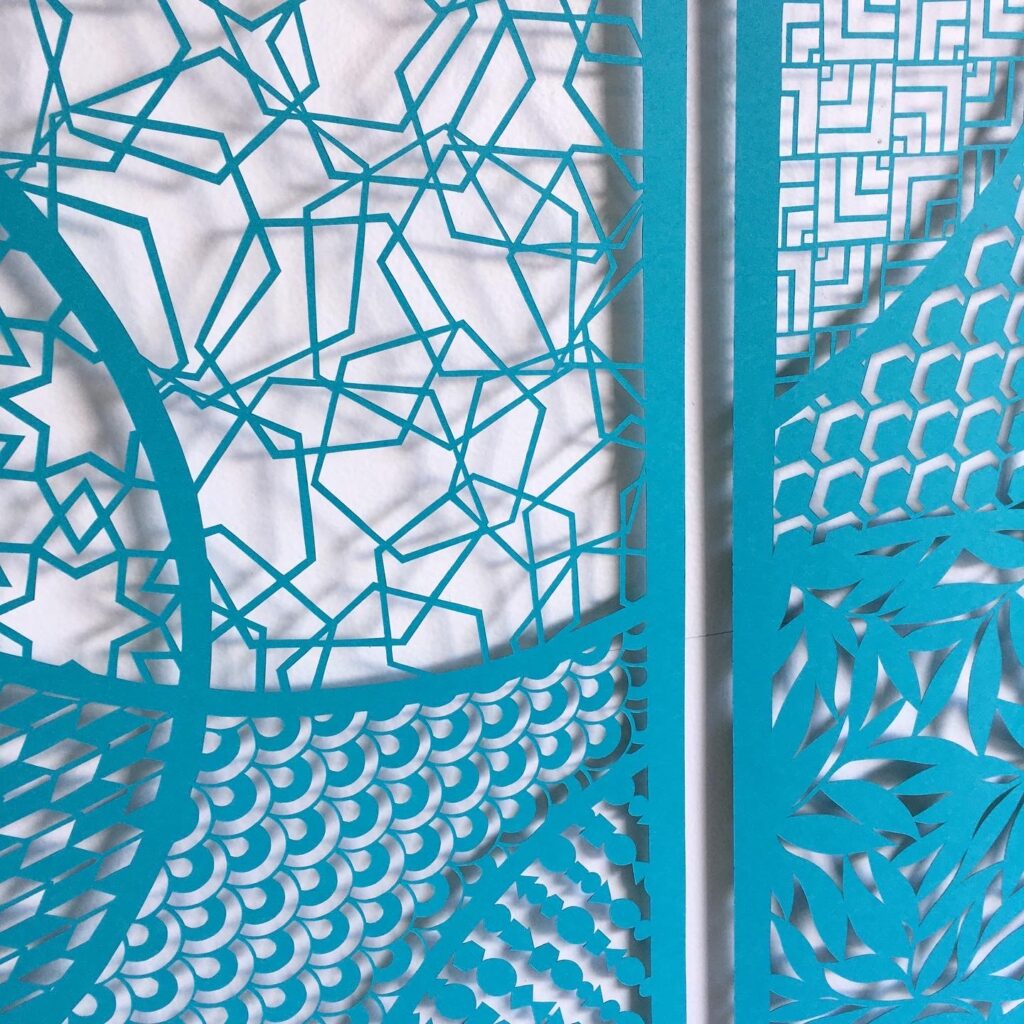
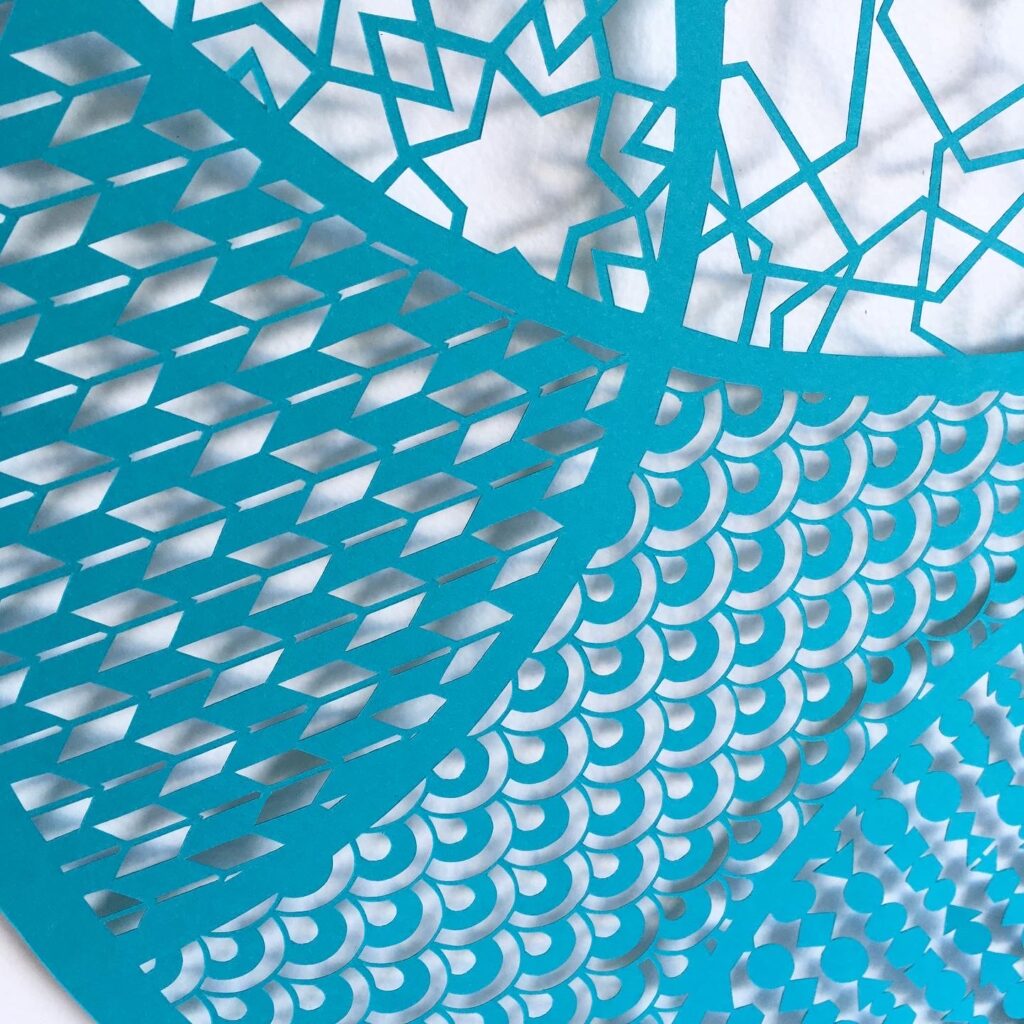
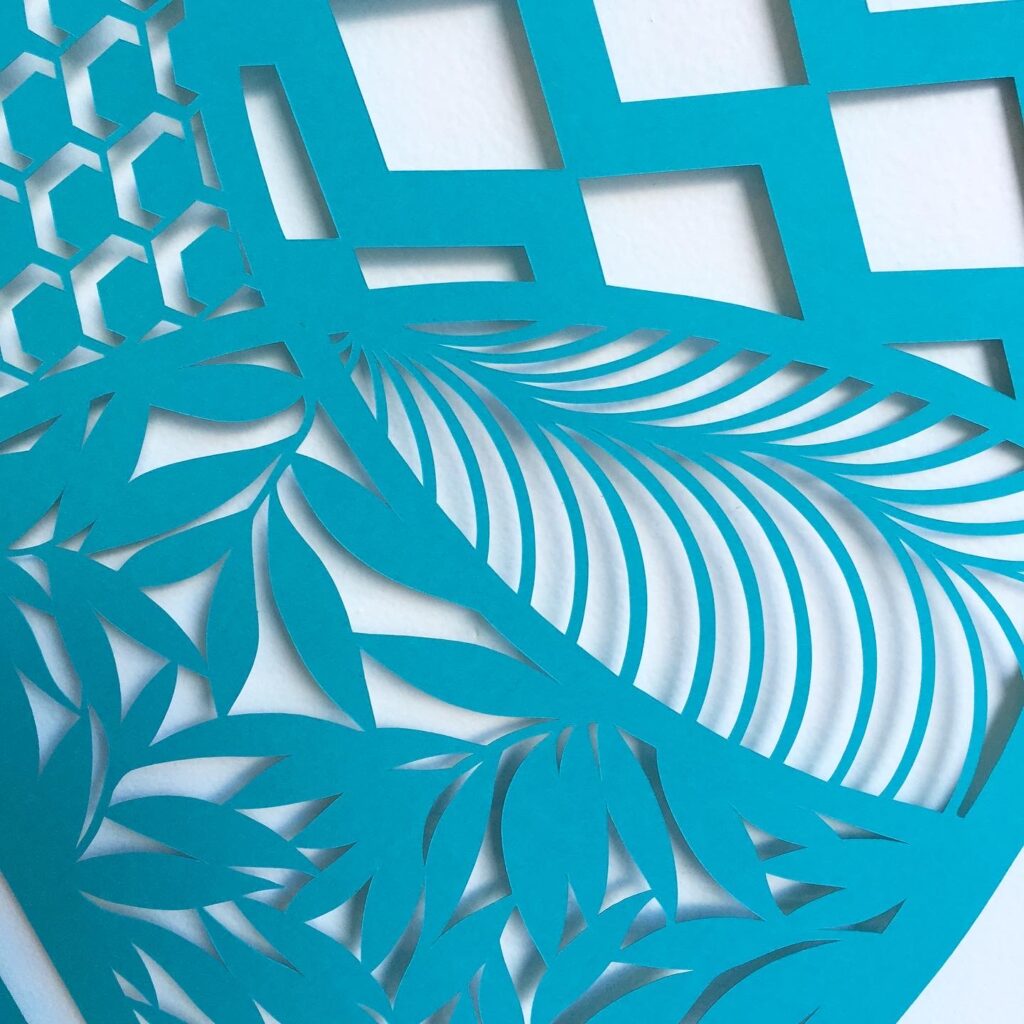
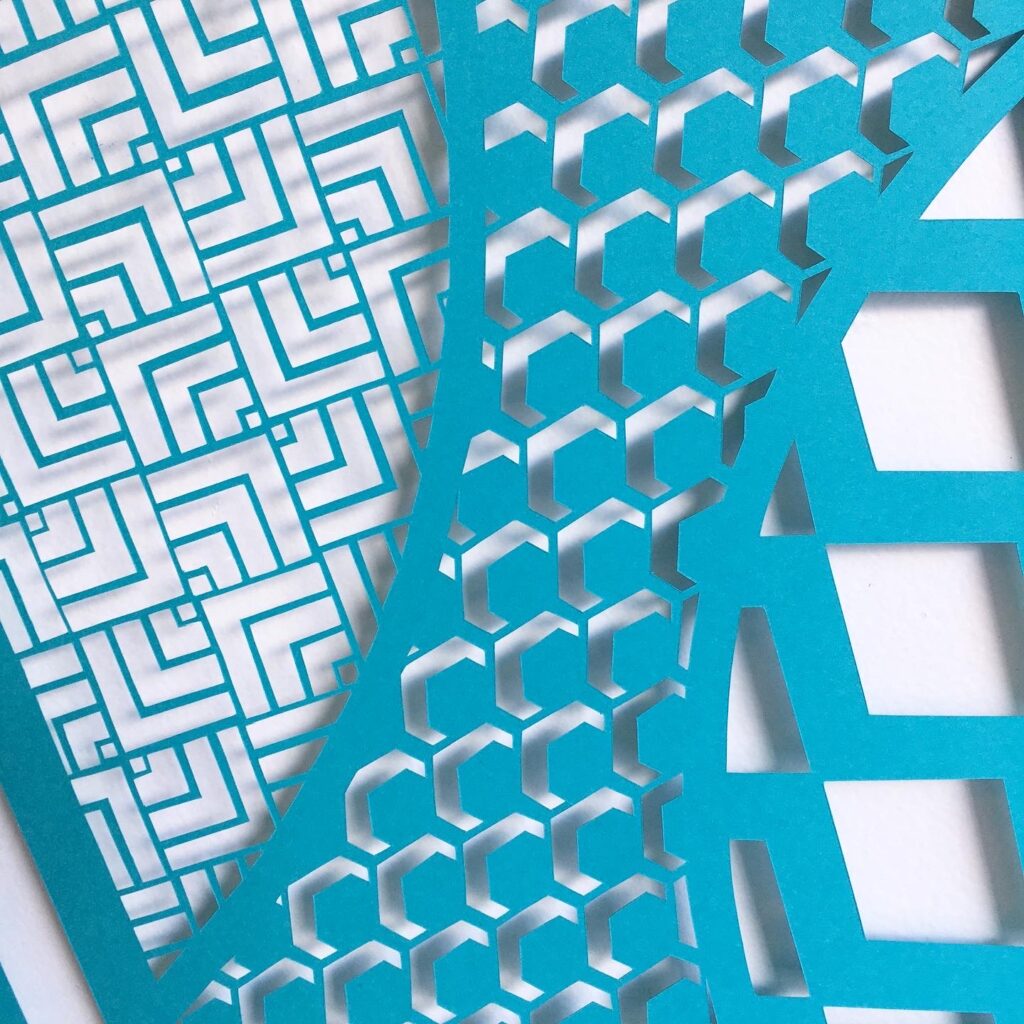
Pattern Mixing Diptych in Turquoise

Earlier today I was looking at the sketchbook drawing this piece is based upon and realized how much more complex it became in the final version. It was always a diptych but the paper cut version walked away with additional sections and way more elaborate patterning.

This turquoise blue paper is my number one favourite of all the colours in the Canson Mi-tientes range. (It is sooooooo goooooood). I could use it again and again to make all sorts of things.

With this piece I really started to consider the line weight of each pattern, which is something tricky to figure out in the drawing stage. I like that the upper sections of both half-circles have sections that are matching in airiness because the paper is mostly cut away, while the sections below are more dense. This was not planned, so clearly dumb luck panned out well with this piece.

The final version is hand-cut from Canson Mi-teintes paper, and each one is 18 inches by 10 inches.

Pattern Mixing in Poppy Orange

This is the second in my new series of pattern mixing paper cut pieces. I finished this piece in late June, and was super jazzed about how beautiful it turned out. The paper is a vibrant Poppy Orange and the patterns play together in an energetic way that is pleasing to the eye.

I hand drew most of the patterns in this piece but I also decided to use some previously cut paper pieces as stencils to trace some of the most complicated ones – like the Islamic geometric pattern inside the circle. Those ones always feel intimidatingly complicated to hand draw.

This piece is another that began as an idea in my sketchbook, exploring composition and a pretty crude mixing of pattern ideas. It’s been so helpful to have these drawings, capturing ideas, to refer back to when working on a more refined and finished piece.

The lozenge is hand-cut from Canson Mi-teintes paper, and the finished size is 22″ x 16.5″.

Pattern Mixing Cut and Ink Test

The paper I often use in my work comes in a pretty limited range of colours, and I’ve been trying to figure out if I can customize this by painting or printing on the paper. It’s tricky because the Canson Mi-Teintes paper warps and buckles with the addition of wet mediums because it isn’t made for painting or printing.

I was inspired by another artist to try rolling ink and acrylic paint onto the paper to add smooth flat colour (which is what I actually want). I tried it out on two different types of paper I use in my work, and it was mixed results.

I made this pattern mixing piece from one of these ink rolling experiments on Mixed Media paper but the results aren’t great on closer inspection. The ink and paint sit on the surface and flaked off at the edge of every single cut line. It made for very messy work with these small flakes covering my cutting matt and hands as I worked.

The piece itself was an experiment in quickly putting together a pattern mixing piece as a test of the idea, to move from sketchbook drawings to a completed piece of work.

Pattern Mixing in Cut Paper Series

This is the first in a new series of pattern mixing pieces I started working on back in late May/early June. I’ve been pondering creating this work for a loooooong time, and only figured out how to bring it to life thanks to planning and drawing in a sketchbook. (I’ll share some of those at a later date).

I’m terrible at pre-planning work but in order to evolve/improve how I create work I needed to add this to my process. I spent a long time sketching out ideas before ever moving on to the next stage of making, and then I now use this sketchbook work as reference.

I did practice drawing patterns and mixing them together in the sketches, but the biggest leap was how to lay them out within the larger form. I don’t pre-plan ahead of time what patterns to include and instead make those decisions as I go.

I’m using a few different books as reference for patterns, but also still like to include non-repeating patterns that I “make up” as I draw. I was so thrilled when the first piece felt like it came together successfully. I love its odd organic shape filled with energetic patterns.

The final photo is of the piece hung the opposite way because I was trying to figure out which way worked better as “up”.

The finished piece is hand-cut from Canson Mi-Teintes 90lb paper, and is 25 x 18.25 inches.

Work In Progress: Printmaking/Cut Paper Collaboration

Late last year I met with my friends Rebekah and Norberto, who run The Hive Printing, to talk about working together on pieces for a show I have in 2021. I want to include screen prints but don’t have the skills the create the work I have in mind, and asked if they’d be interested in collaborating with me. Lucky for me, they were keen, even though it is something they don’t normally do

Norb produced initial test prints of two potential screen print designs in May. I worked with these to explore ways of cutting the paper that collaborates with the print, and compliments the design, while also not removing too much of the paper. My usual process is to cut most of the paper away, but I want to showcase the cutting and printing in equal measure in this case.

I think pattern cutting small sections of the prints will work very well. I drew my designs on the front of the paper in these tests, but the finished pieces will be worked from the back. Based upon these tests, I think this collaboration is going to work very well.